Budgeting
What are sinking funds?
A sinking fund is money you set aside a little each month for a bill you know is coming, like car insurance in June or gifts in December.
A sinking fund is money you set aside each month for a bill you know is coming but don’t pay every month. Instead of finding $600 for car insurance in June, you put away $100 a month starting in January.
What it is
The name comes from business. When a company borrows money by selling bonds, a sinking fund is how it pays them back a little at a time instead of all at once. FINRA explains bonds if you’re curious. In a household budget, a sinking fund is the same idea: a known amount, needed by a known date, saved in equal pieces.
It’s different from an emergency fund. An emergency fund covers things you can’t predict, like losing a job or getting in a car accident. A sinking fund covers things you can. The holidays come every December.
Common sinking funds include:
- Car insurance, registration and upkeep
- Holiday and birthday gifts
- A vacation
- Yearly subscriptions and memberships
- Back-to-school costs
- Medical bills up to your insurance deductible
- A new phone or laptop
- Vet bills
Why it matters
Bills that don’t come every month are easy to forget. A monthly budget can look fine for eleven months, and then the car insurance bill shows up. Without a sinking fund, that bill often goes on a credit card, and you start the next month behind.
Small amounts are easier to handle than big ones. Setting aside $75 a month is one more line in your budget. Finding $900 in December is a scramble.
And when the bill comes, you’re ready. Paying it from money you saved for it means your plan worked.
How to do it
1. List the bills for the next twelve months
Look through last year’s statements for anything you paid once or twice: insurance, renewals, gifts, trips. The list may be longer than you expect.
2. Work out the monthly amount
Divide each bill by the number of months until it’s due. For bills that come once a year, Utah State University Extension and Oregon’s Division of Financial Regulation suggest the same thing: divide by 12 and set that much aside every month.
| Bill | Amount | Due in | Each month |
|---|---|---|---|
| Car insurance | $600 | 6 months | $100 |
| Holidays | $900 | 10 months | $90 |
| Vet checkup | $240 | 12 months | $20 |
The later you start a fund, the more you have to save each month. That’s a good reason to start all of them now.
3. Set the money aside
You can move it into a separate savings account. Or you can leave it in checking and keep a list of how much belongs to each fund. Either way works, as long as you don’t count that money as free to spend.
4. Pay the bill from the fund
When the bill comes, the money is waiting. Pay it, then start saving again for next time.
How to do it in Simple Balance
A budget in Simple Balance can save toward a date on its own.
Set the goal
On Budgets, under Set a budget, choose the category you’ll pay the bill from, like Car insurance. Type the bill’s amount in Saving up for. A Needed by box then appears: type the due date there, not in Ends after.
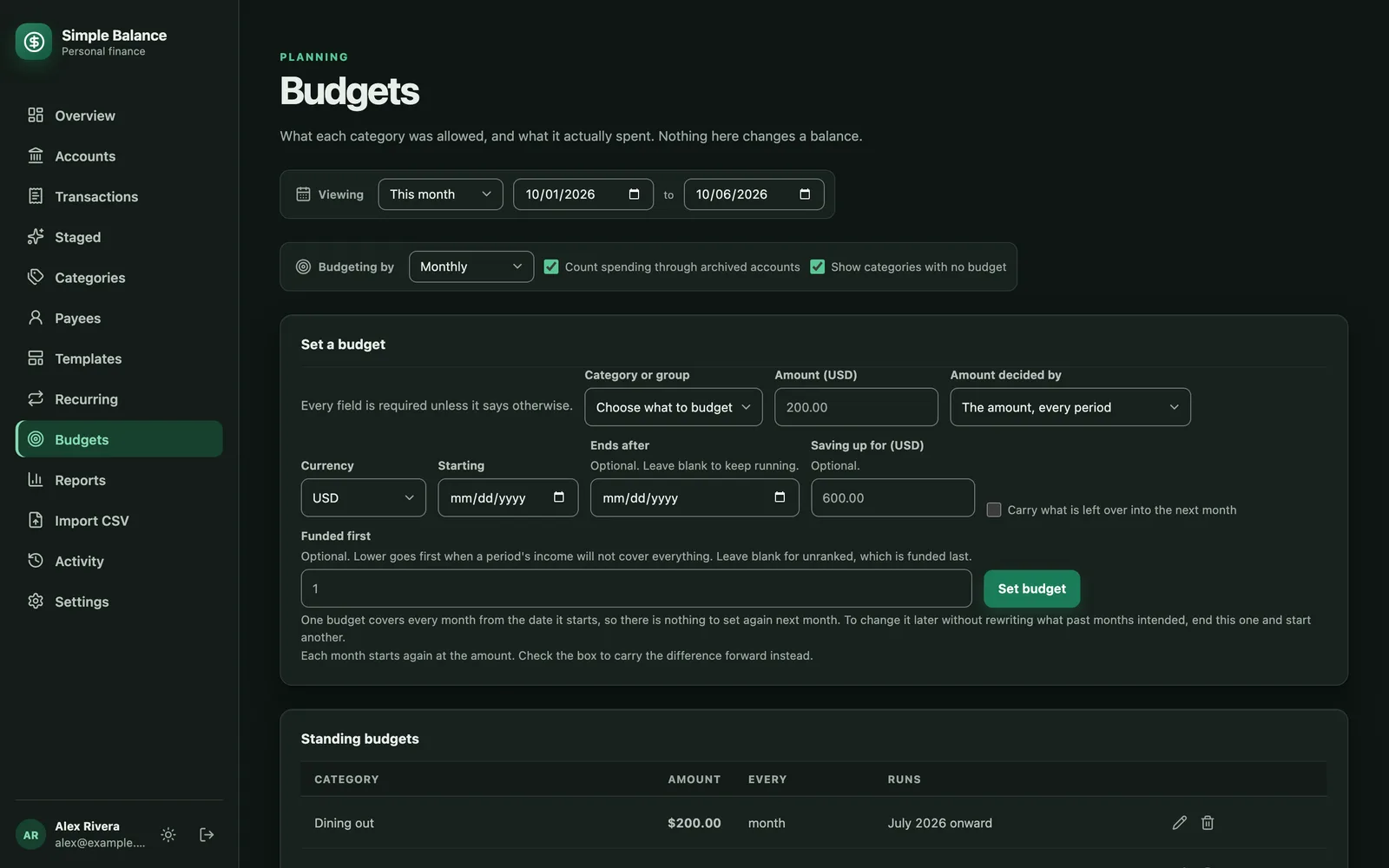
The money in this picture is made up. It’s the real product, filled with example spending.
Let it work out the amount
You don’t type a monthly amount. Each month, the budget figures out what’s still needed and divides it by the months left before the due date. The amount changes as the fund fills up, and it stops asking once the fund is full. Carry what is left over into the next month is turned on for you, since a fund has to keep what it saves. Saving goals, automatic amounts and the forecast in the docs shows exactly how each month’s amount is worked out.
Pay the bill from the same category
When the insurance bill comes, record it in the Car insurance category. The money the budget set aside covers it.
Know where the money is
A fund is money in your accounts that’s set aside for one job. The Budgets page shows what’s left to assign after every fund and envelope has taken its share, which tells you how much is really free to spend. If you keep the fund in a separate savings account, leave The budget is about the money in this account turned on for that account, so its money still counts.
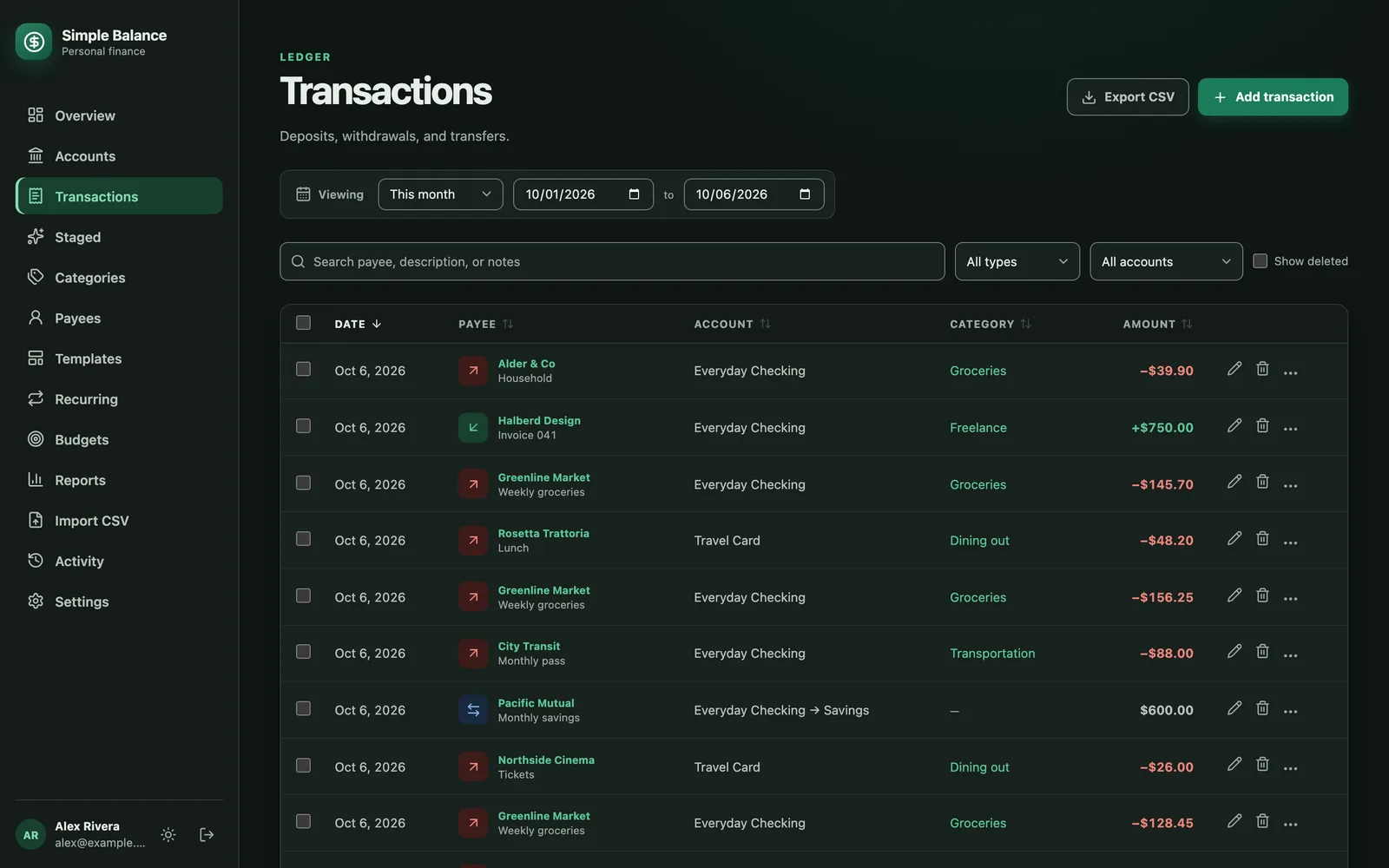
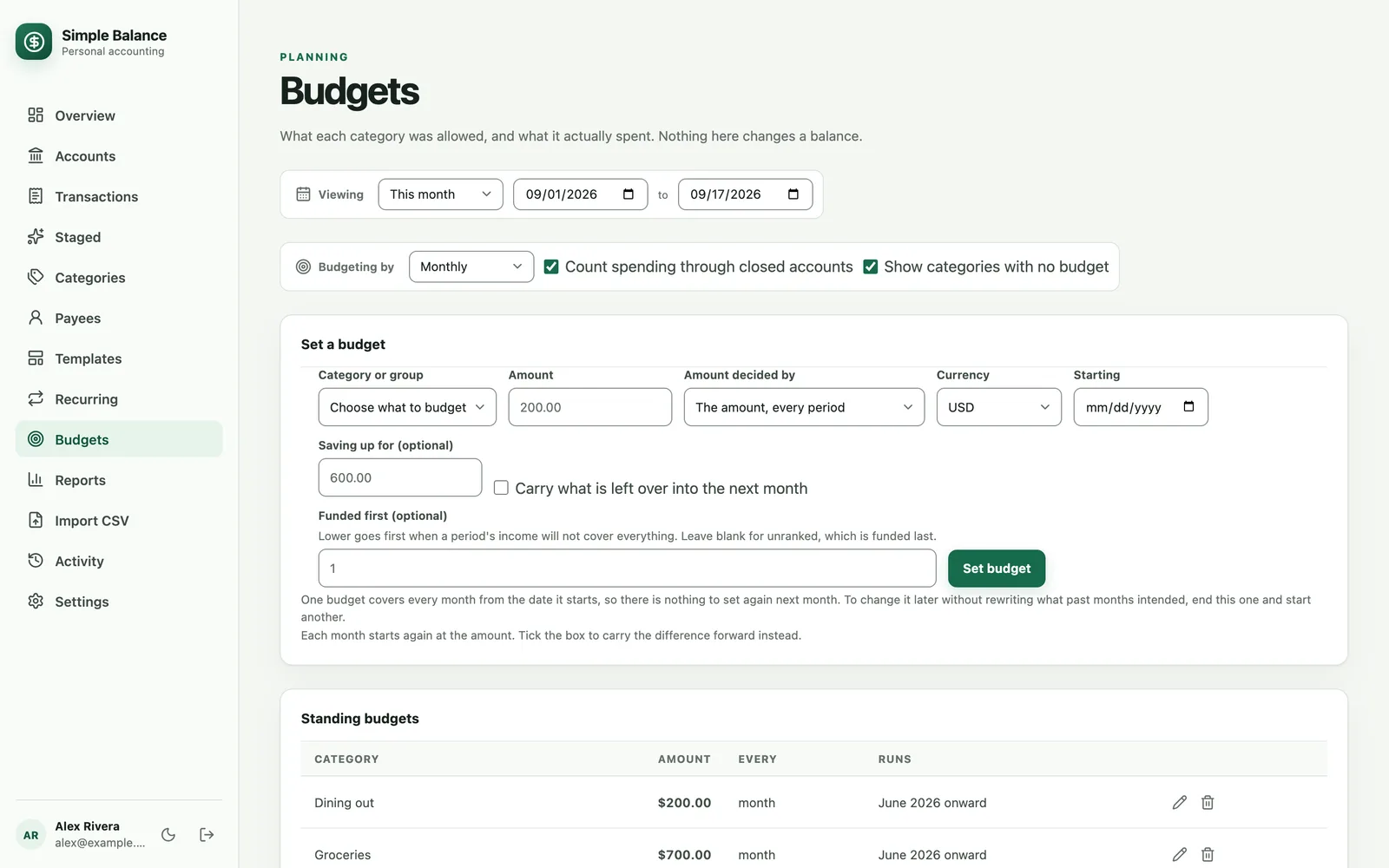
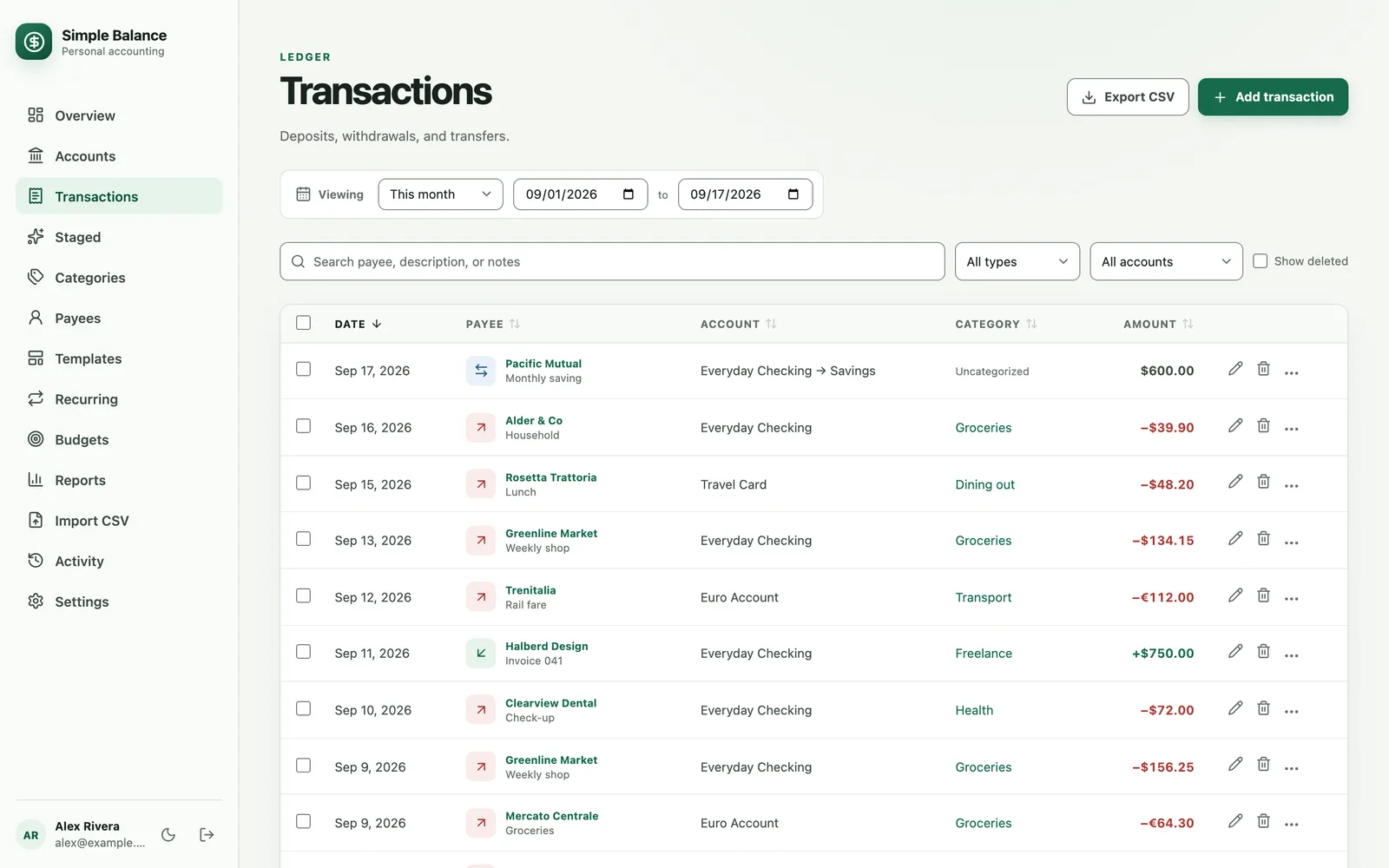
The money in this picture is made up. It’s the real product, filled with example spending.
One fund for each bill
Each fund belongs to the category it’s saving for. Holiday gifts, insurance and a vacation each get their own budget, and each works out its own monthly amount.
Sources
- FINRA. Bonds.
- Melanie Dabb, Utah State University Extension. How do I budget for non-monthly expenses?. October 13, 2020.
- Oregon Division of Financial Regulation. Creating a personal budget.