The bigger picture
How much should you have in an emergency fund?
Three to six months of expenses is the usual answer. What counts as an emergency, how to work out your own number, and how to build the fund a step at a time.
An emergency fund is money you set aside for things you can’t plan for, like losing a job, a medical bill, or a car repair you need to get to work. The Federal Reserve Bank of St. Louis and FINRA both suggest saving three to six months of essential expenses. With an emergency fund, a bad month stays a bad month. Without one, it can turn into a debt you’re still paying off a year later.
Why it matters
Without savings, emergencies go on credit cards. A $1,200 car repair becomes a card balance, and the interest makes that repair cost more every month it isn’t paid off.
Lots of people don’t have that cushion. In the Federal Reserve’s survey of household finances for 2025, 63% of adults said they’d cover a surprise $400 expense with cash or its equivalent. That includes paying with a credit card and paying it off in full. So more than a third would have to borrow, sell something, or couldn’t cover it at all.
An emergency fund protects everything else, too. One bad week can wipe out a budget, a plan to pay off debt, or a savings goal. The fund keeps those plans on track.
It also buys you time. If you lose your job with three months of expenses in the bank, you can look for the right next job instead of grabbing the first one.
How much
The usual rule of thumb is three to six months of essential expenses. The Federal Reserve Bank of St. Louis and FINRA both give that range. That’s expenses, not income: what it costs to keep a roof over your head, the lights on, food on the table, and the minimum payments made.
Where you land in that range depends on how long it would take to replace your income. The St. Louis Fed describes the fund as what pays your bills “while you’re searching for the next job.” If your work is irregular, or yours is the only income in your home, finding new work could take longer. Aim closer to six months.
Start smaller. Six months of expenses is a lot of money. Iowa’s Department of Insurance and Financial Services suggests three steps: save $500 first, then one month of expenses, then three months and beyond. The Consumer Financial Protection Bureau’s guide to building an emergency fund makes the same point: even a small amount helps.
What counts as an emergency
Losing income, medical and dental bills, urgent car or home repairs, and emergency travel all count. The holidays, a vacation, and a yearly insurance bill don’t. You can see those coming, so they belong in sinking funds instead.
How to do it
1. Work out your monthly essentials
Add up rent or mortgage, utilities, groceries, insurance, transportation and minimum debt payments for a recent month. Tracking your spending gives you a real number instead of a guess.
2. Multiply
Three times that monthly number is your starting target. Six times is the fuller goal.
3. Give it its own account
Keep the fund in a savings account, apart from the account you spend from. The St. Louis Fed’s advice is to keep it “available when you need it, but not too easily available.” It also notes that many people use a savings account at a local bank or credit union.
4. Make it automatic
Set up a transfer on payday, even a small one. FINRA suggests starting with “a regular, automatic contribution of an amount you can reliably afford,” and adding extra when you can. A tax refund or a bonus is a good time for that.
5. Refill it after you use it
Using it is what it’s for. Afterward, go back to step 4 until it’s full again.
How to do it in Simple Balance
Find your monthly essentials
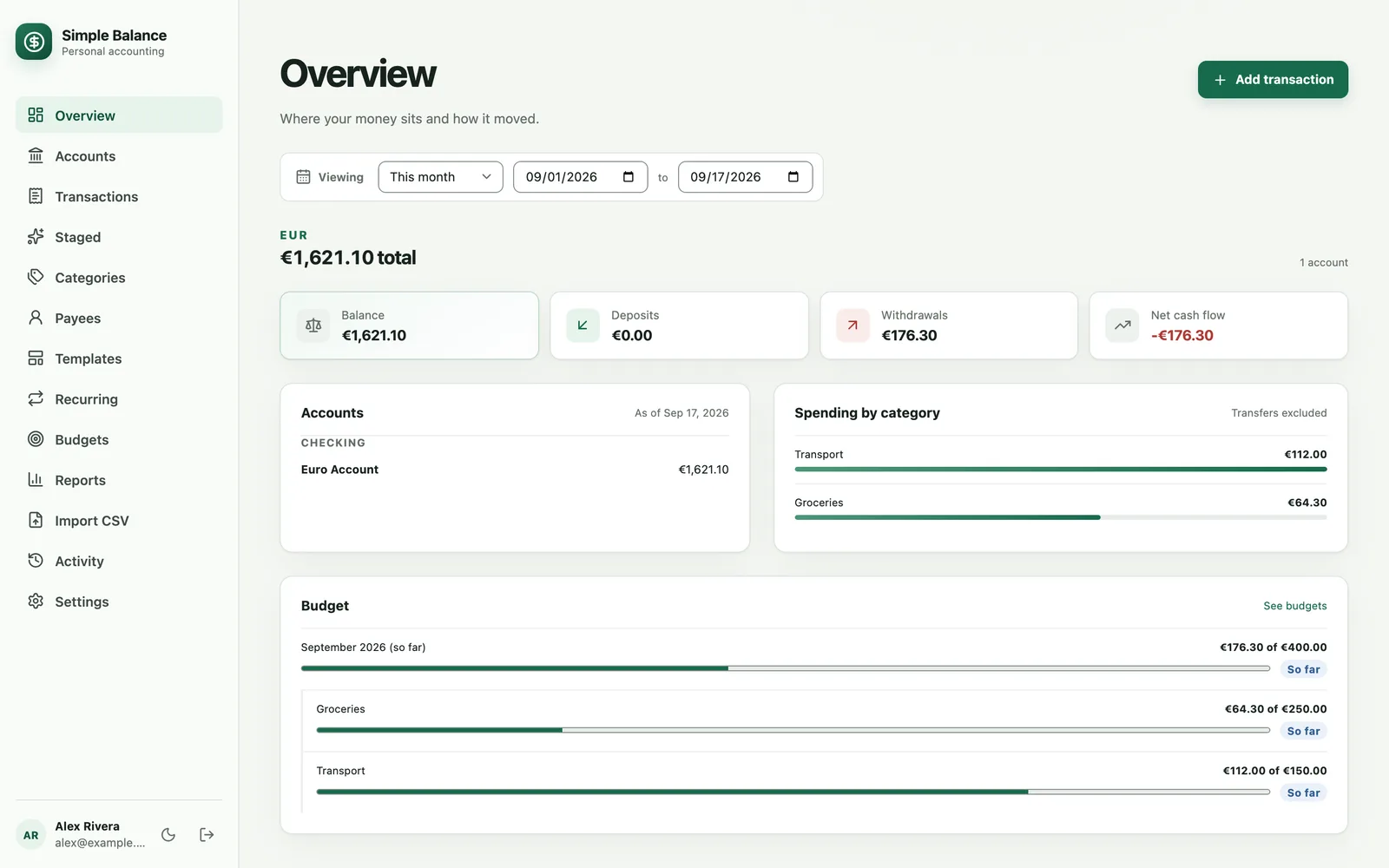
Reports has an Income and expenses report. Group it by month and look at your expenses for the last three months. Or use Overview to see spending by category over the same dates, and add up the essential ones.
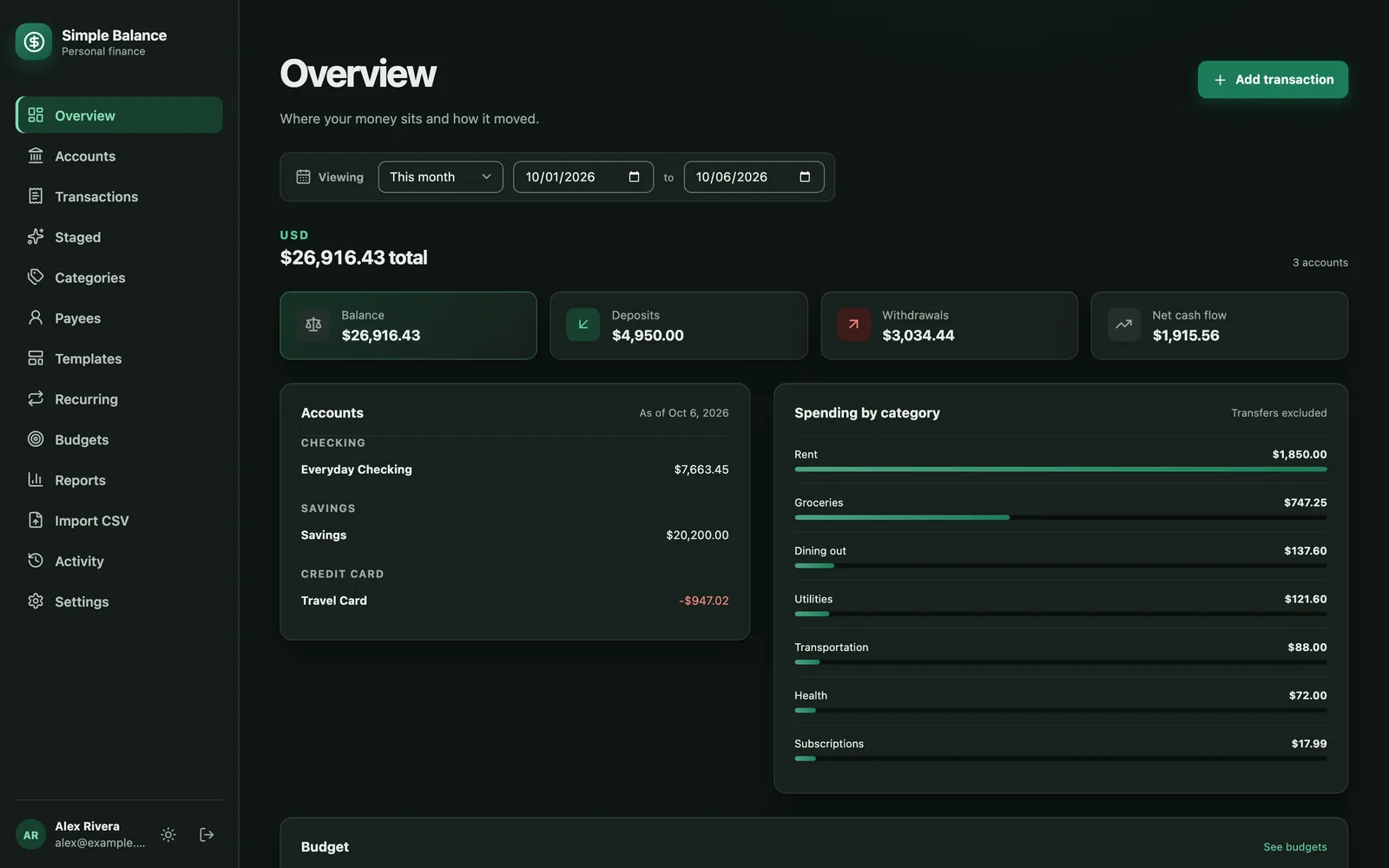
The money in this picture is made up. It’s the real product, filled with example spending.
Give the fund its own account
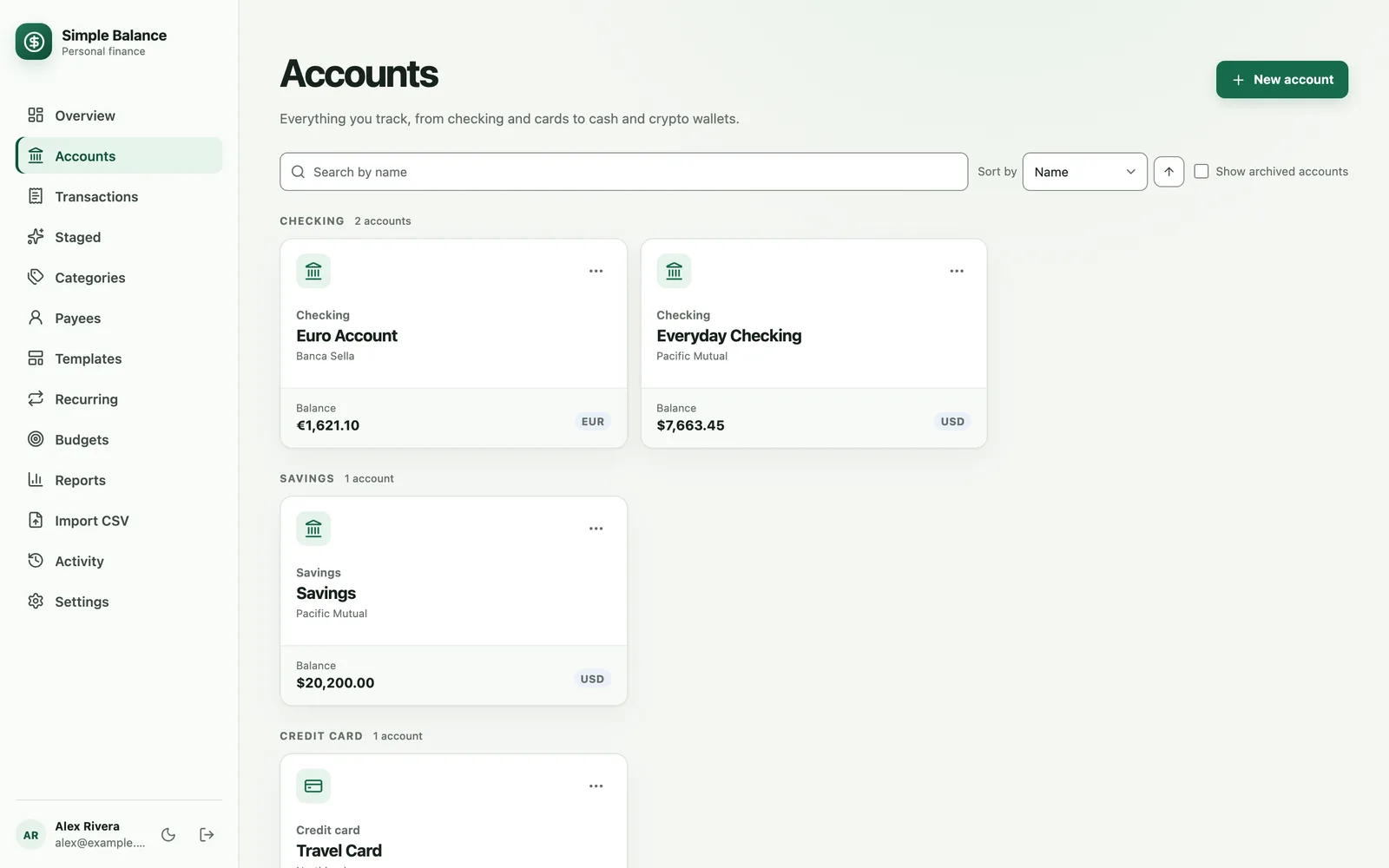
On Accounts, add a Savings account for the fund. On its form, turn off The budget is about the money in this account, so your budget doesn’t treat emergency money as money to spend. If you use left to assign, moving money into the fund lowers it, and that’s right: the money has a job now.
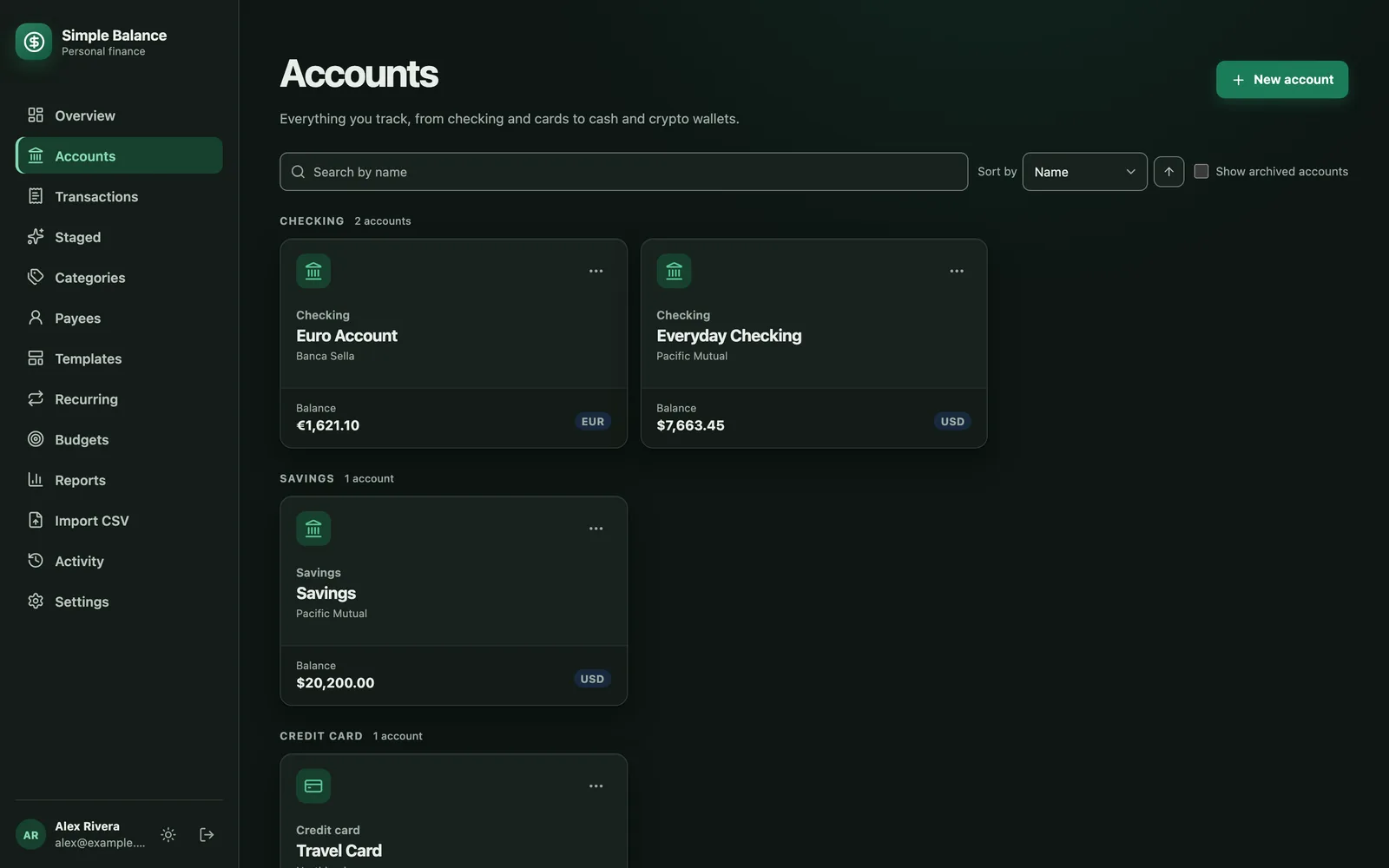
The money in this picture is made up. It’s the real product, filled with example spending.
Make the payday transfer repeat
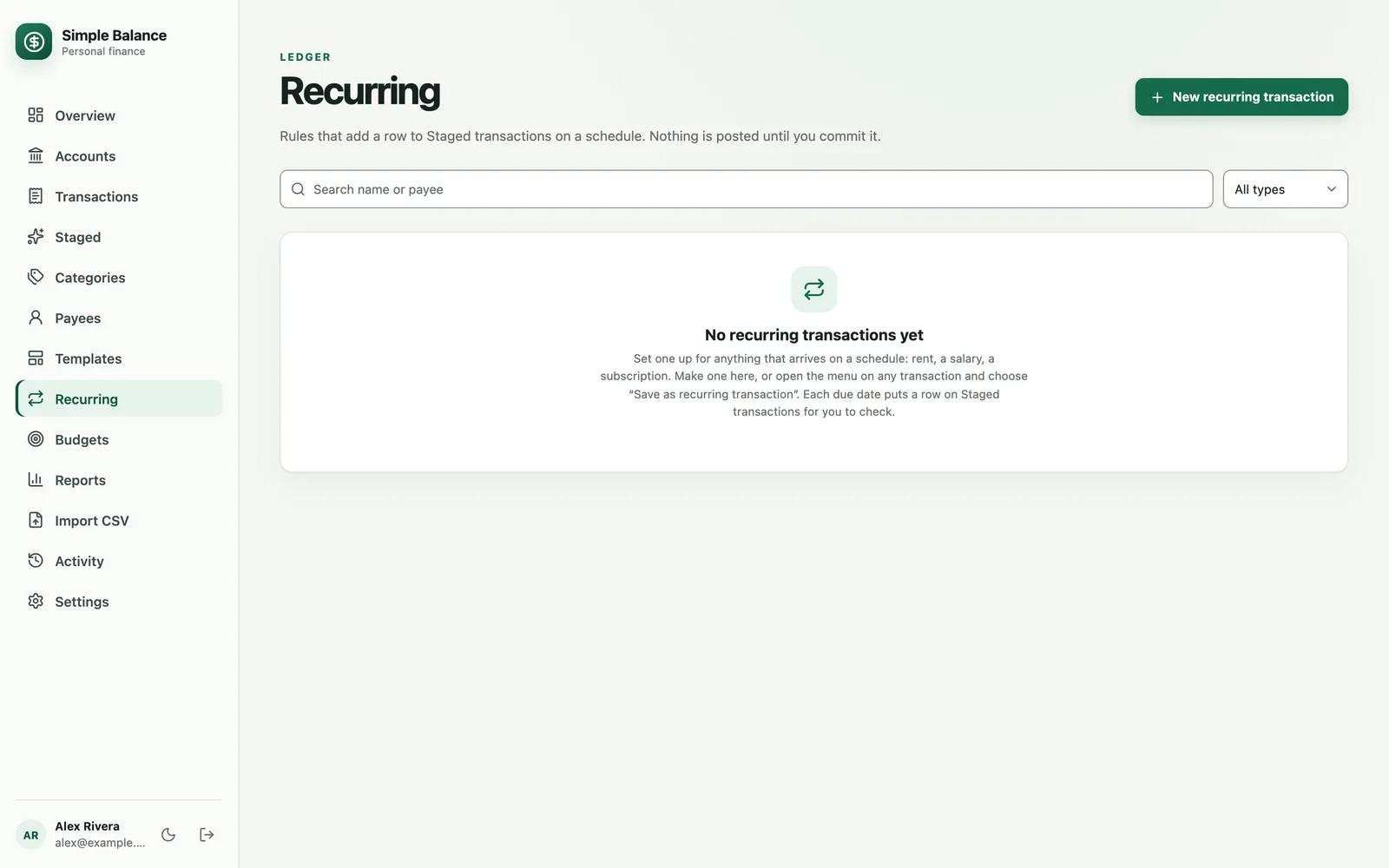
On Recurring, press New recurring transaction and set up a Transfer from checking to the fund on your payday. Each time it’s due, a row shows up in Staged for you to approve once the money has really moved. It never posts on its own.
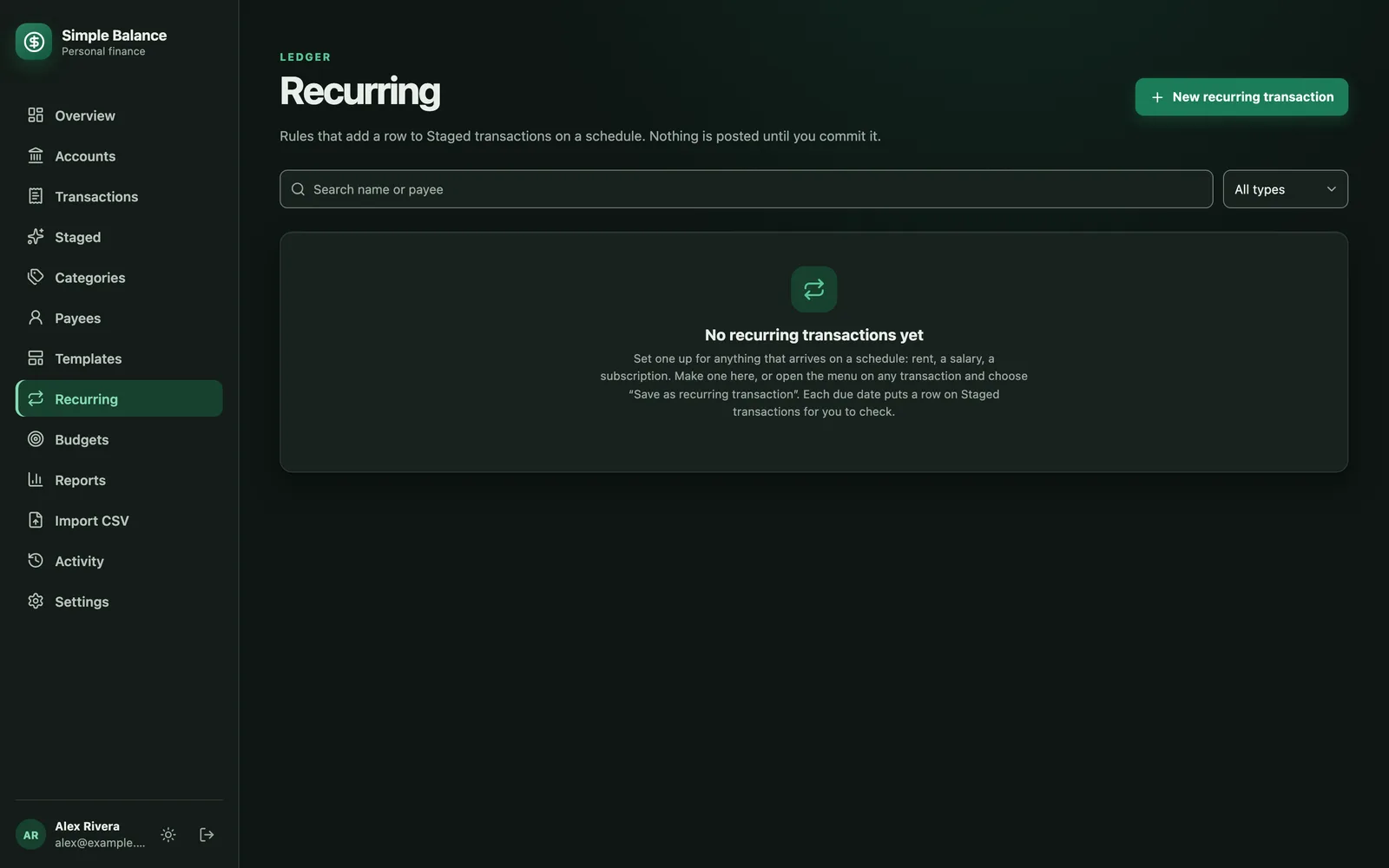
The money in this picture is made up. It’s the real product, filled with example spending.
Watch it grow
You’ll see the fund’s balance on Accounts, and it counts toward your Net worth report like any other account. When you use it, record a transfer back to checking. Then record what you spent it on in its own category, so your reports show what the emergency really was.
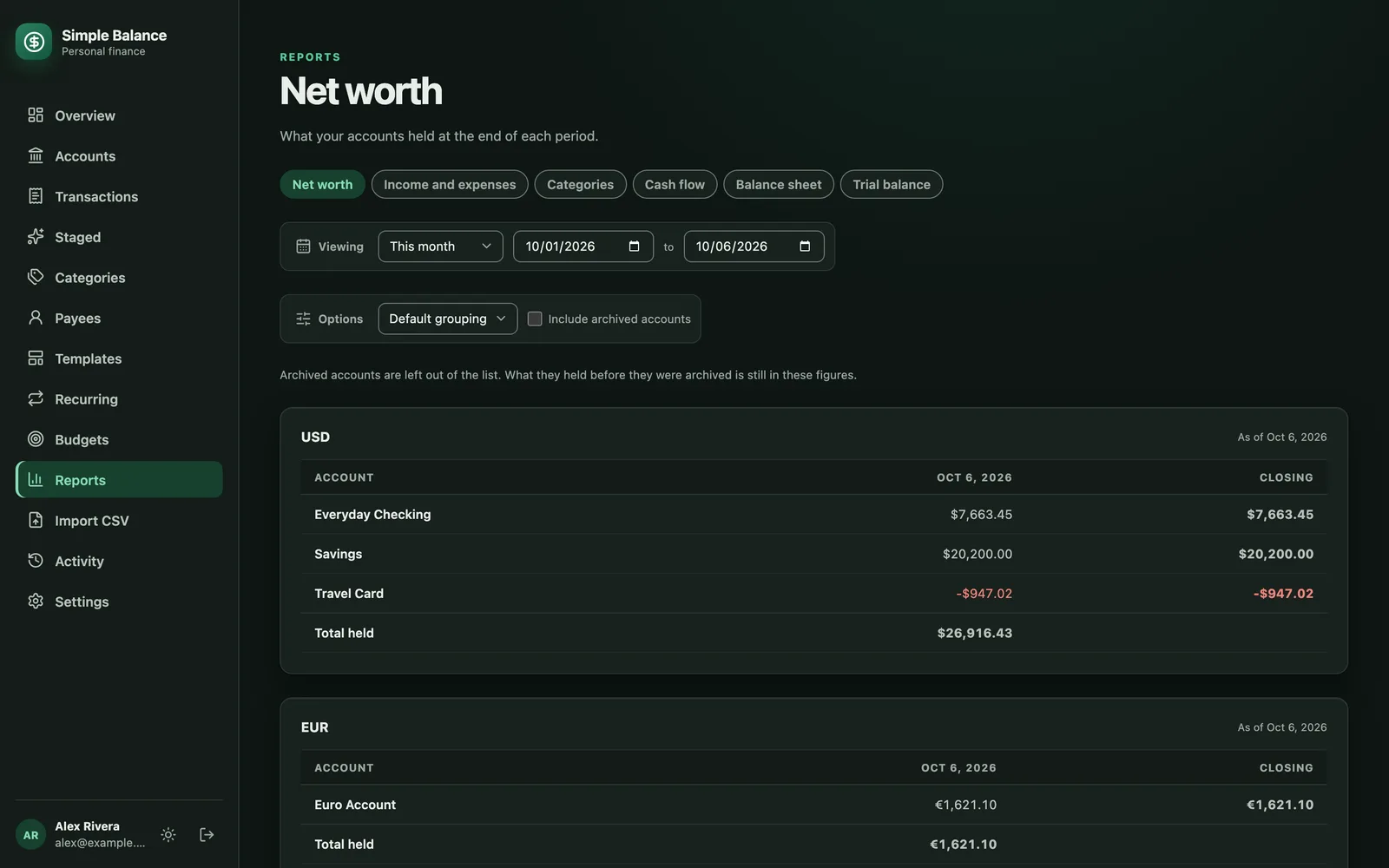
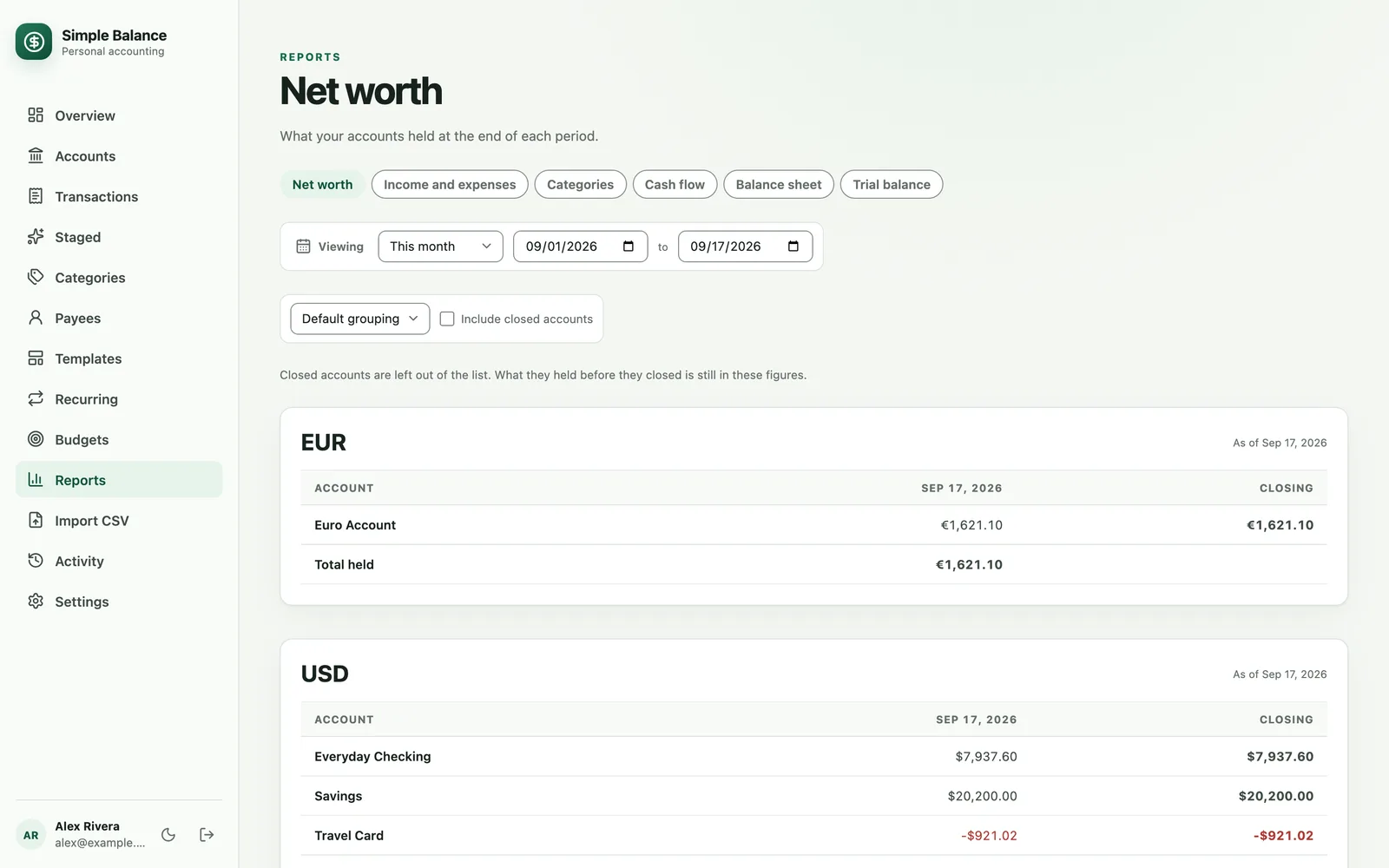
The money in this picture is made up. It’s the real product, filled with example spending.
Sources
- Board of Governors of the Federal Reserve System. Economic Well-Being of U.S. Households in 2025. May 2026.
- Scott A. Wolla, Federal Reserve Bank of St. Louis. When the Unexpected Happens, Be Ready with an Emergency Fund. Page One Economics, September 2, 2025.
- FINRA. Avoid Bad Financial Luck This Friday the 13th With These 5 Tips. March 13, 2026.
- Amy Frolik, Iowa Department of Insurance and Financial Services. Emergency Savings: Your Financial Safety Net. SmartHER Money, September 1, 2025.
- Consumer Financial Protection Bureau. An essential guide to building an emergency fund. Updated October 29, 2025.