Budgeting
How to budget with irregular income
When your pay changes from month to month, from freelance work, tips or commission, plan around your lowest month and the money you already have.
A lot of budgeting advice assumes the same paycheck lands on the same day every month. If you freelance, work for tips or commission, run a small business, or get paid every other week, your pay doesn’t work that way. You can still budget. You just plan up from your worst month instead of down from your average one.
Why it matters
Budgeting from your average month leaves you short in the slow months. Say you earned $3,000 one month and $5,000 the next. Planning to spend $4,000 works in the good month and falls short in the bad one. The bad month is the one where spending ends up on a credit card.
Good months can disappear, too. Without a plan, a big month feels like a raise and gets spent like one. Then a slow month comes and there’s nothing set aside.
Taxes can be a surprise. If nobody takes tax out of what you’re paid, as with most freelance work, part of every payment isn’t yours to spend.
How to do it
1. Find your floor
Look at the last six months and find the month you earned the least. That’s your floor, the amount you can count on. Penn State Extension suggests using exactly that number as your expected income.
2. Make a bare-bones budget that fits under it
List rent, utilities, groceries, transportation, insurance and minimum debt payments. These essentials should fit inside your lowest month. If they don’t, work on that first, because no budgeting method can fix it.
3. Rank everything else
Write down what gets money next, in order. For example: a cushion of savings, then extra debt payments, then the fun stuff. In a good month you get further down the list. In a slow month you stop sooner, and you already know where.
4. Set aside money for taxes first
If you work for yourself, there’s no employer taking tax out for you. If you expect to owe $1,000 or more when you file, the IRS generally wants you to pay estimated tax during the year, in four payments. Put part of every payment into a separate account before you budget the rest. How much depends on where you live and how much you earn, so it’s worth asking a tax preparer once.
5. Build a cushion, then budget from last month
Penn State Extension suggests an emergency fund of at least one to three months of your average income. It also suggests keeping the extra from bigger paychecks as a cushion for the smaller ones. Once your cushion covers a month of spending, you can budget each month from what you earned the month before. You always know the amount before the month starts, because the money is already in the bank. Getting there usually takes a few months of saving extra from the good ones.
6. If you’re paid every two weeks
Every two weeks works out to 26 paychecks a year. So in most years, two months have three paydays instead of two. Budget each month on two paychecks, and treat the third as extra. Put it toward savings, a debt, or your cushion.
How to do it in Simple Balance
Record income as it comes in
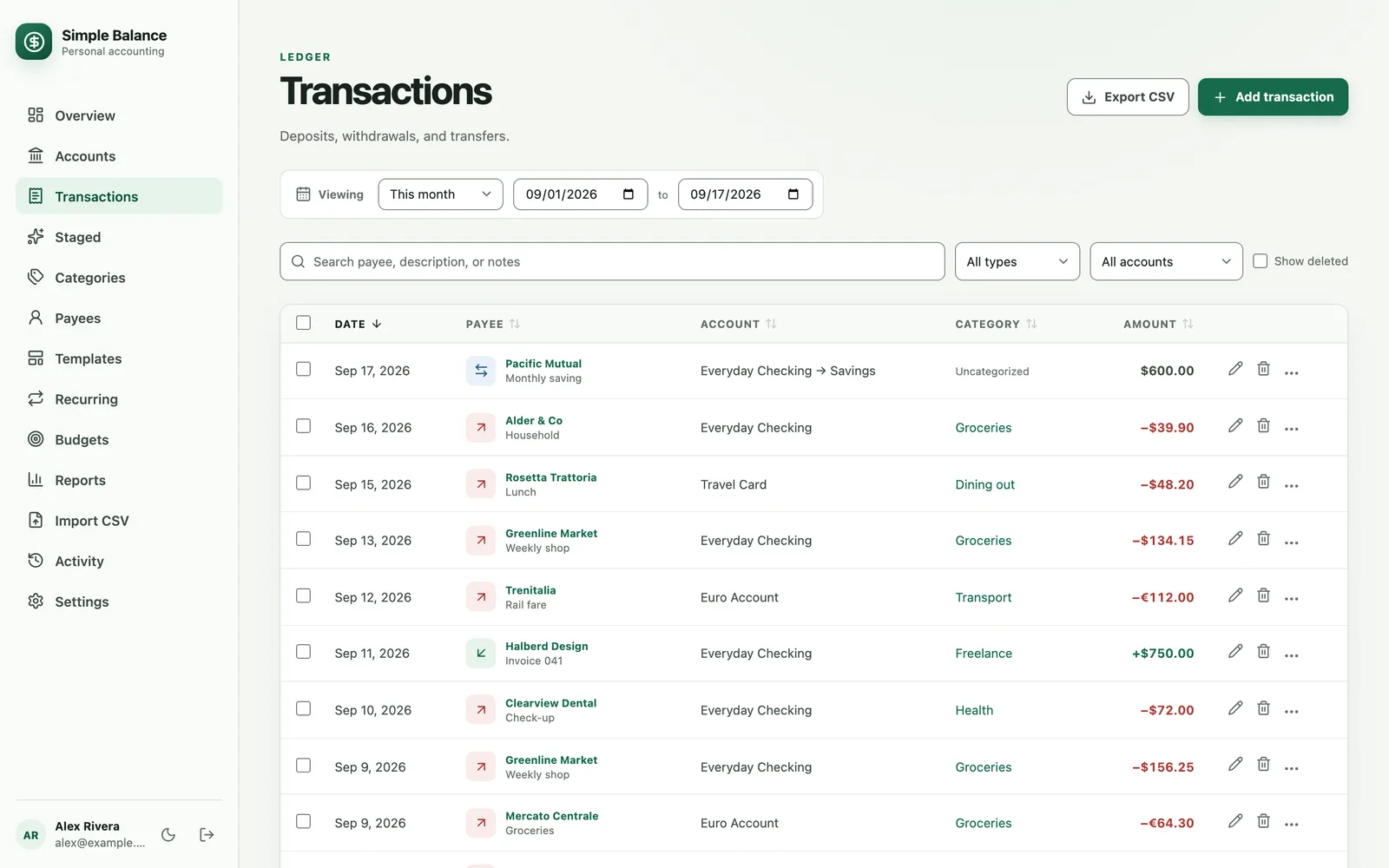
Each payment is a Deposit with an income category, like Freelance or Tips. If you’re paid on a schedule, set it up once on Recurring. It can repeat every two weeks as well as every month. If the amount changes, leave it blank. On each payday, a row shows up in Staged for you to fill in with the real amount.
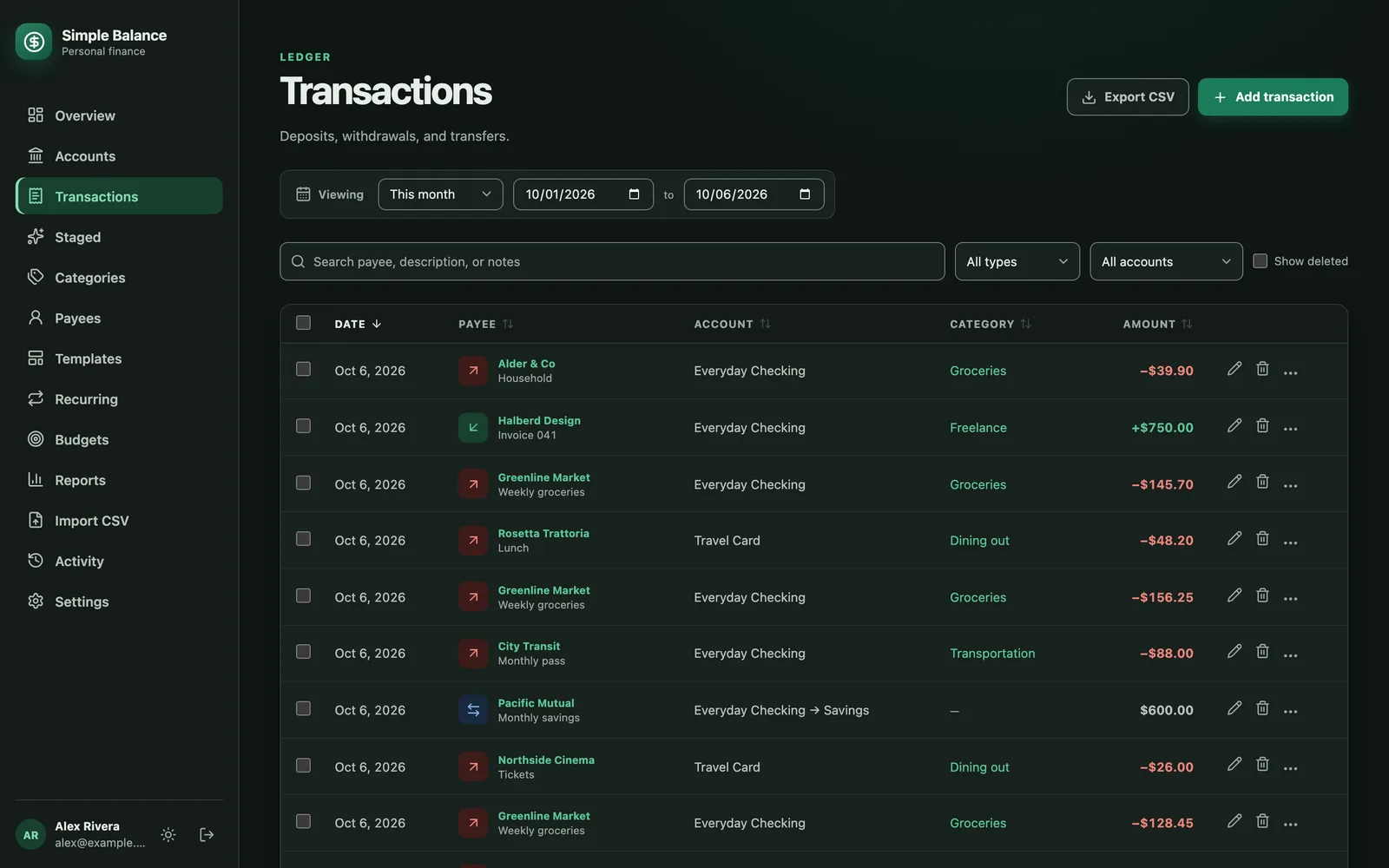
The money in this picture is made up. It’s the real product, filled with example spending.
Budget from last month’s income
On Budgets, under Amount decided by, choose A share of the income before it. Then a rule like “groceries get 15% of what came in last month” sets the budget for you each month. It uses last month because a share of a month that’s still going would keep changing.
Decide what gets paid first
Give your most important budgets a Funded first number. Lower numbers go first. The Budgets page then shows how much of each budget the month’s income covers, filling them in your order until the money runs out. Put rent and groceries first, and in a slow month you’ll see exactly which budgets didn’t get covered.
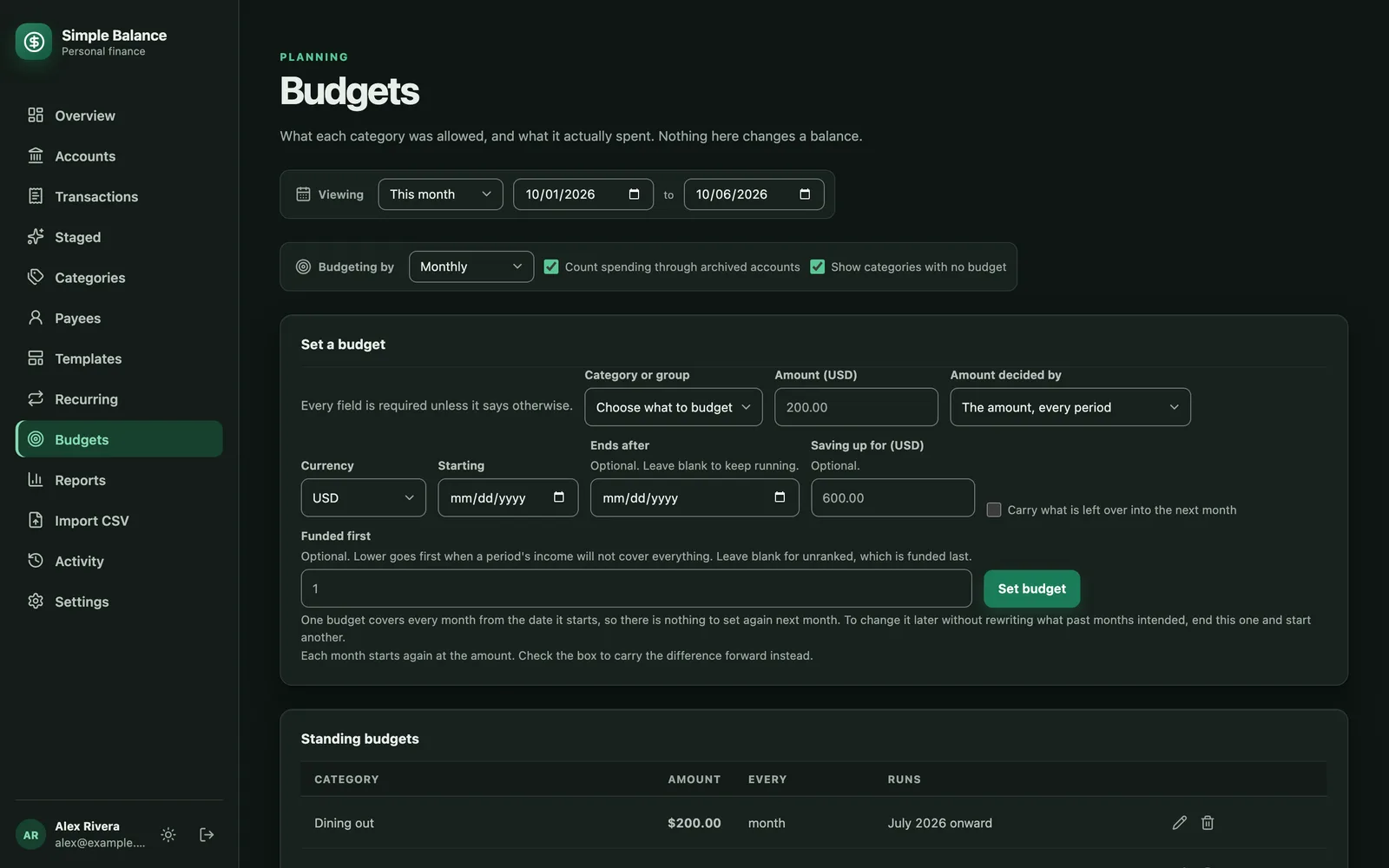
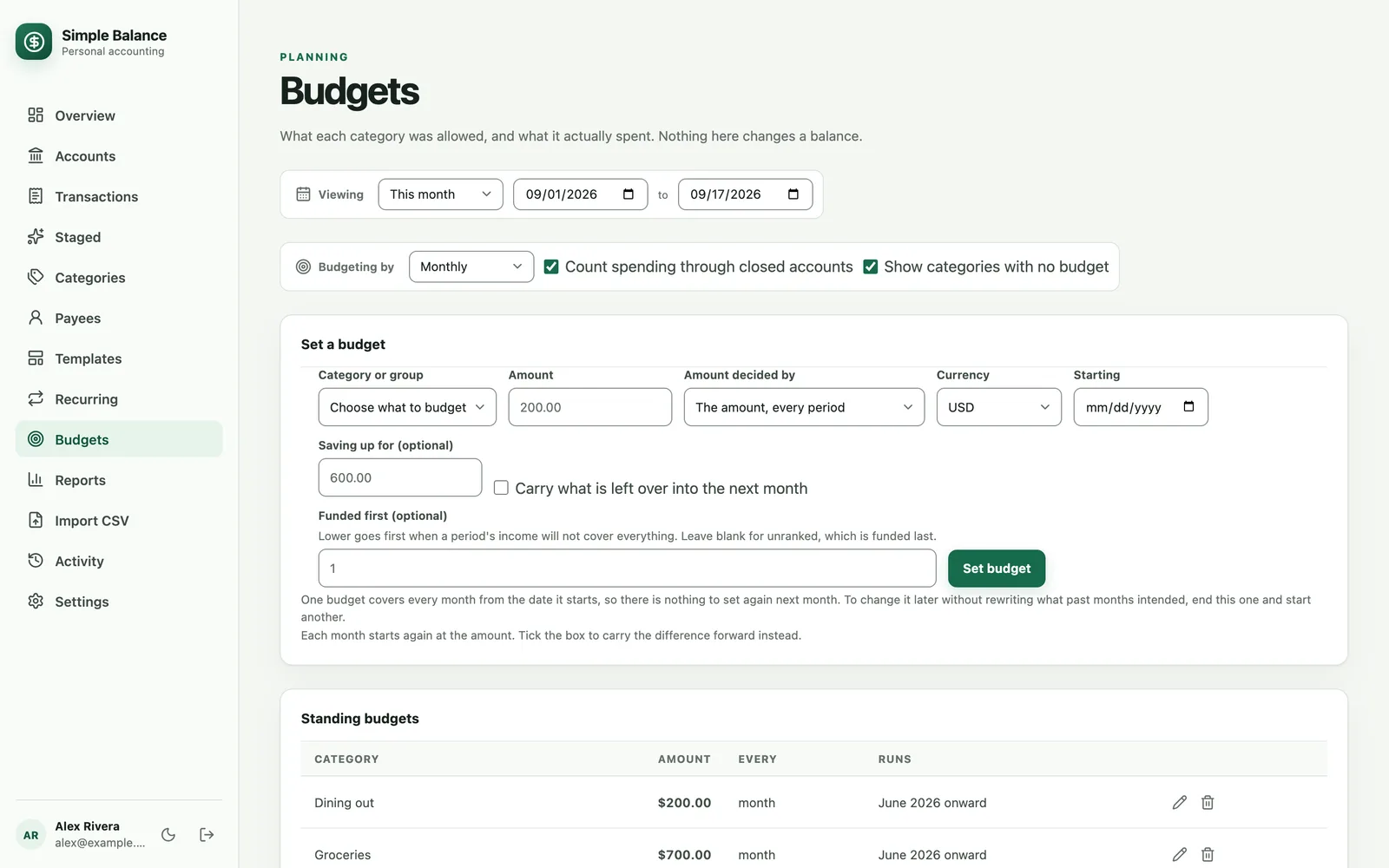
The money in this picture is made up. It’s the real product, filled with example spending.
Let a budget follow your history
Choose What the last few periods spent under Amount decided by, and the budget becomes the average of your last few months. That suits spending that rises and falls with your income.
Look ahead
The What happens next panel on Budgets projects your balances month by month. It starts from what your accounts hold today and adds your recurring transactions and what you usually earn and spend. None of it has happened yet. It’s a picture of where things are headed if nothing changes.
Saving goals, automatic amounts and the forecast in the docs explains each of these in more detail.
Sources
- Christina Pulman and Denise Continenza, Penn State Extension. Budgeting with Irregular Income. Updated April 22, 2025.
- Internal Revenue Service. Self-employed individuals tax center.
- Internal Revenue Service. Estimated taxes.
- Lehigh University Finance and Administration. Semi-monthly to Bi-weekly FAQ.