Budgeting
What is envelope budgeting?
Cash in labeled envelopes, and when one is empty you stop. How the envelope method works, how to do it without cash, and how to keep track of cash you do spend.
The classic version of envelope budgeting uses real envelopes. On payday you take out cash and split it into envelopes labeled Groceries, Gas and Fun. You spend from each one until it’s empty, and then you stop. You may also hear it called “cash stuffing.”
What it is
Suzanne Holloway, an extension agent at the University of Florida, describes the method as using “physical or digital envelopes for each spending category.” Once an envelope is empty, you stop spending in that category “until the next budget period.” In practice, that comes down to two rules:
- Each envelope holds the money for one kind of spending. Grocery money comes from the grocery envelope and nowhere else.
- What’s left at the end of the month stays in the envelope. With cash, it’s still sitting there, so it doesn’t go back into one big pile. If you spent $340 from a $400 grocery envelope, next month starts with $60 already in it.
The second rule is what sets envelopes apart from a budget that starts over every month.
Why it matters
The limit feels real. A number on a spreadsheet is easy to ignore, but an empty envelope is hard to argue with. Even if you never touch cash, sticking to “empty means stop” is what gives the budget teeth.
Spending less one month pays off the next. Because leftovers stay put, spending less on gas in March gives you more for gas in April. In a budget that resets every month, that saving just disappears.
You can see what overspending costs you. If you borrow from the Fun envelope to cover groceries, you know exactly how much less fun you’re having.
It also helps with costs that don’t come every month. An envelope for car repairs that gets $50 a month and sits untouched for a year has $600 in it when the brakes go.
How to do it
1. Choose which spending gets an envelope
Envelopes work best for spending that changes from month to month and that you control, like groceries, eating out, gas, household supplies and personal spending. Bills paid automatically, like rent or insurance, can stay in your checking account.
2. Decide how much goes in each
Use what you’ve actually spent over the last few months. How to track your spending shows you how to find that out.
3. Fill the envelopes on payday
With cash, that means a trip to the bank. A Utah State University Extension guide, Dam that Cash Flow!, puts it simply: cash the check and put the money for each expense in its own marked envelope. Without cash, you write down how much of your checking balance belongs to each envelope.
4. Spend only from the right envelope
When one runs out, stop. If you really need more, move money from another envelope on purpose and write down that you did.
5. Keep the leftovers
Don’t sweep what’s left back into one pile. Leave it in its envelope, or move it to an envelope for something you’re saving toward.
How to do it in Simple Balance
To use Simple Balance as an envelope budgeting app, make each envelope a budget that carries over.
Make a budget carry over
On Budgets, set a budget on a category and check Carry what is left over into the next month. If you don’t spend $50 of your grocery budget in March, you have $50 more for groceries in April. Overspending carries over too. It comes off next month’s amount instead of being forgotten when the month ends.
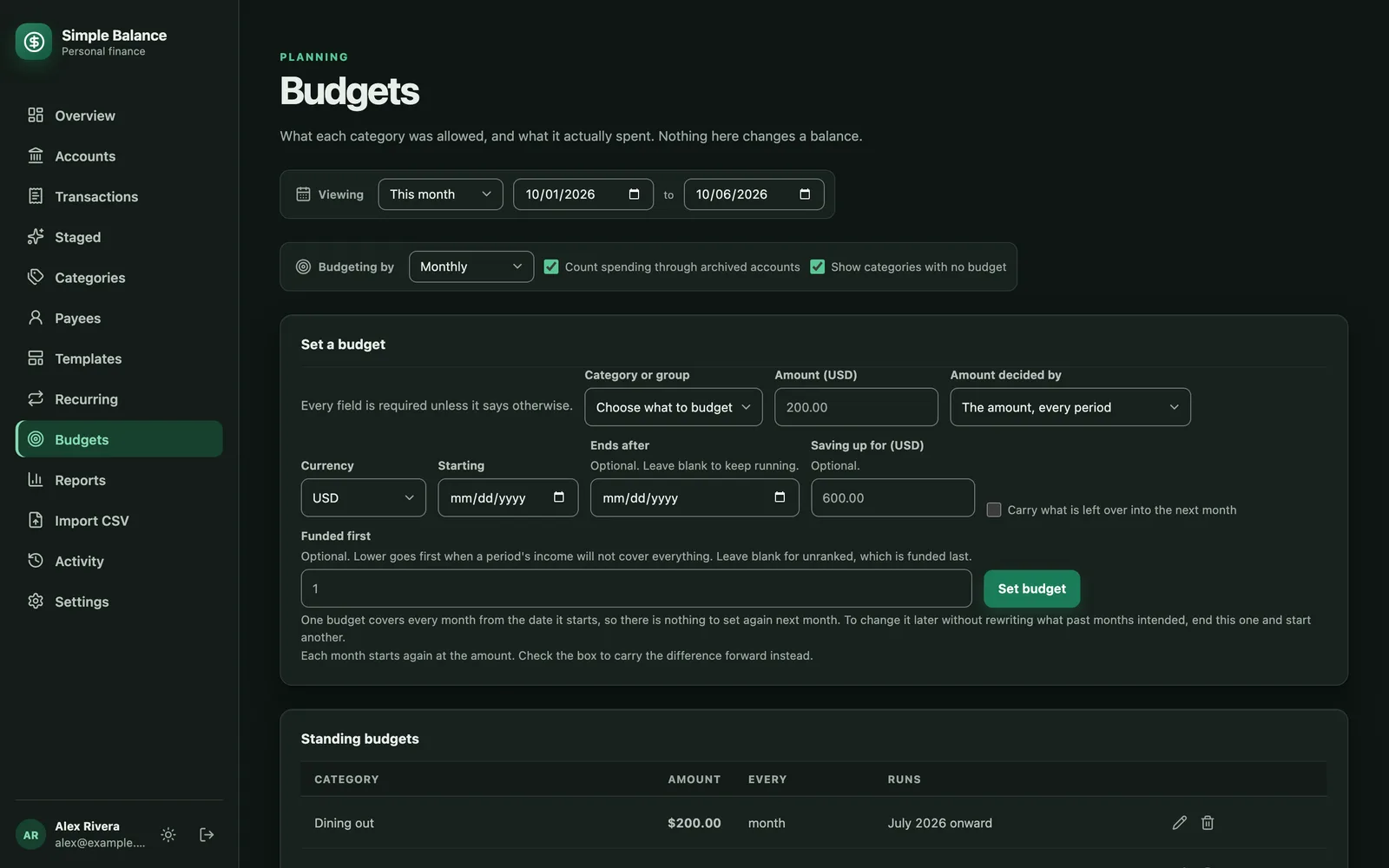
The money in this picture is made up. It’s the real product, filled with example spending.
Put a limit on an envelope
Most to carry limits how much an envelope can hold, in both directions. An envelope you never touch can’t grow forever, and one you keep overspending can’t sink forever.
See what’s left to put in envelopes
Once a budget carries over, the Budgets page shows what’s left to assign. That’s the money in the accounts your budget covers, minus what your envelopes already hold. It’s like the cash you haven’t put into an envelope yet. Bringing it to zero is zero-based budgeting.
Keep track of real cash
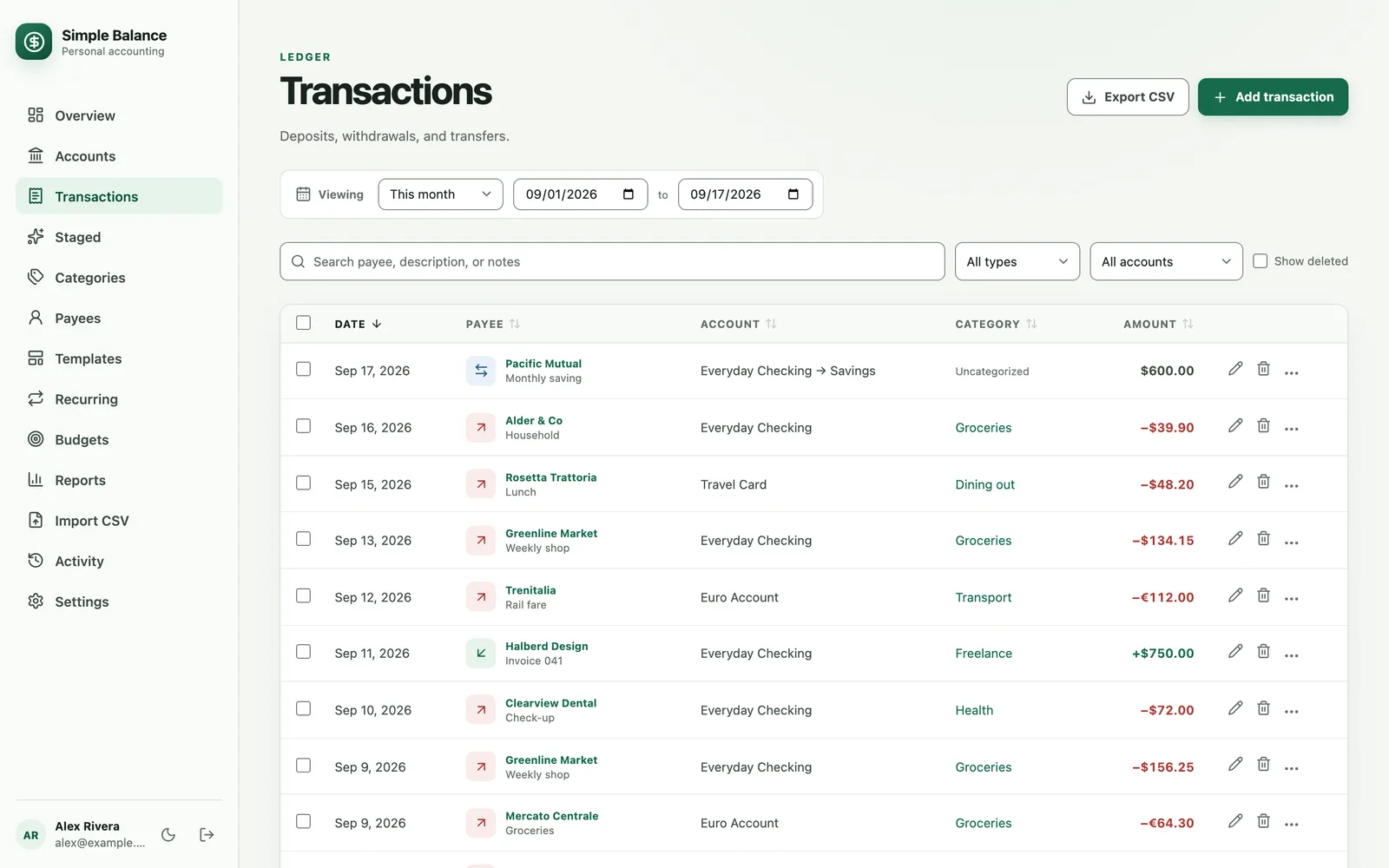
If you do use cash, add an account of type Cash for your wallet or your envelopes. Taking money out at an ATM is a Transfer from checking to Cash, since it’s still your money. Spending it is a Withdrawal from Cash with a category, and that’s what counts against the envelope. In the list below, the $600 moved from checking to savings is a transfer: it shows both accounts and no category.
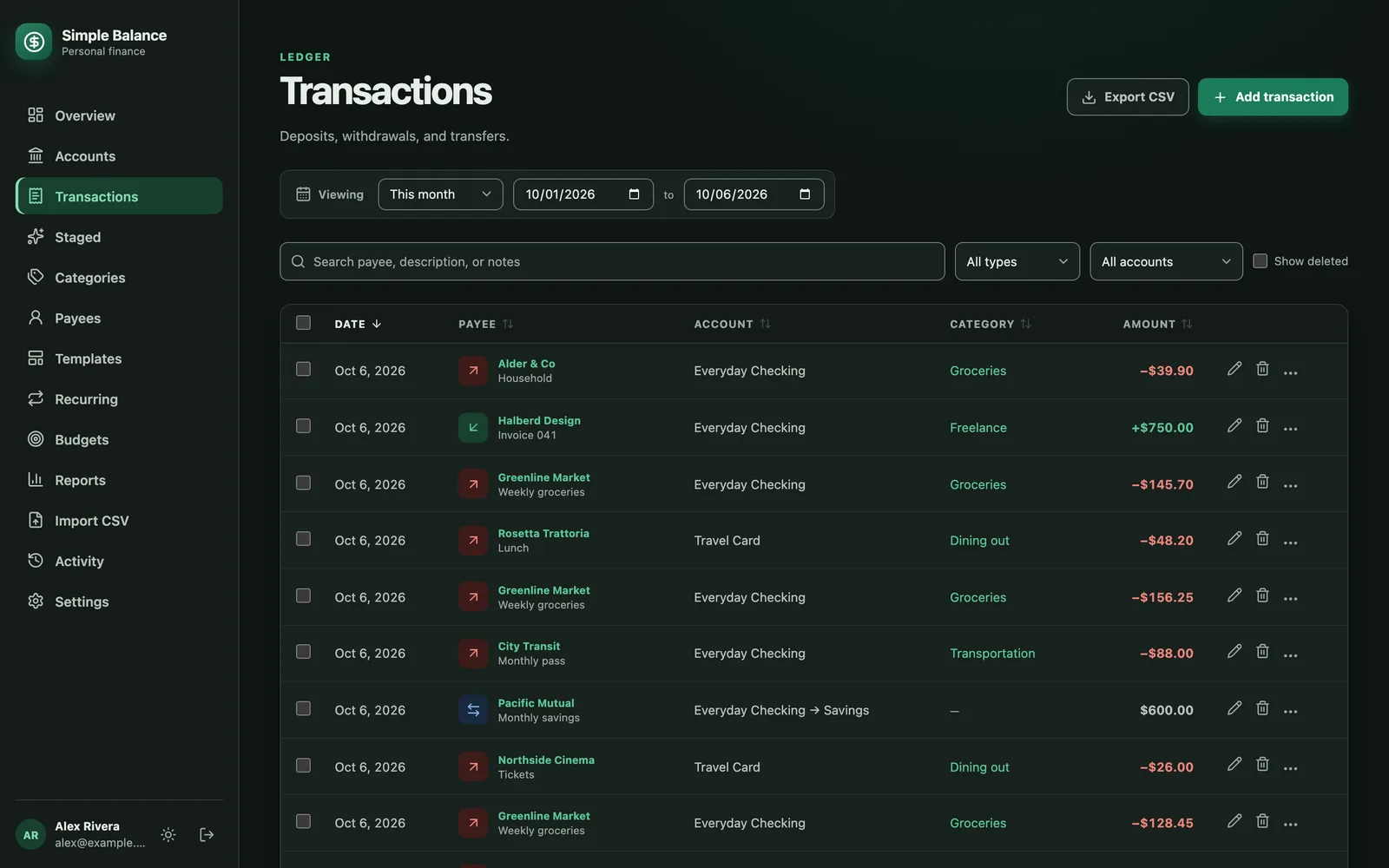
The money in this picture is made up. It’s the real product, filled with example spending.
Make cash quick to record
Cash never shows up in a bank file, so it’s the spending most likely to go missing. Save a template for cash purchases you make often. Open the menu on any transaction and choose Save as template. Next time, pick the template in the transaction form and it fills itself in. If you leave the amount blank, it asks you for one each time.
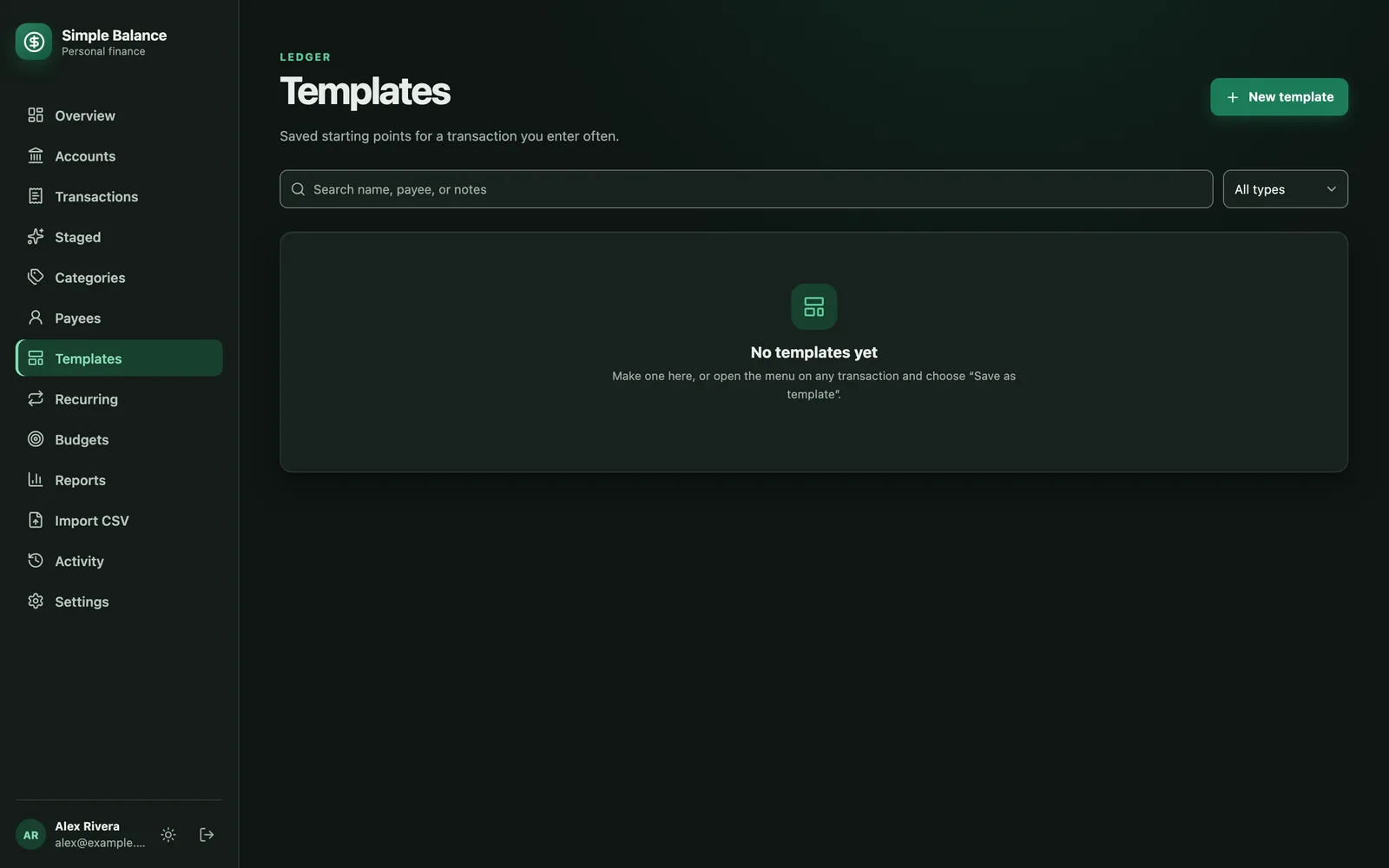
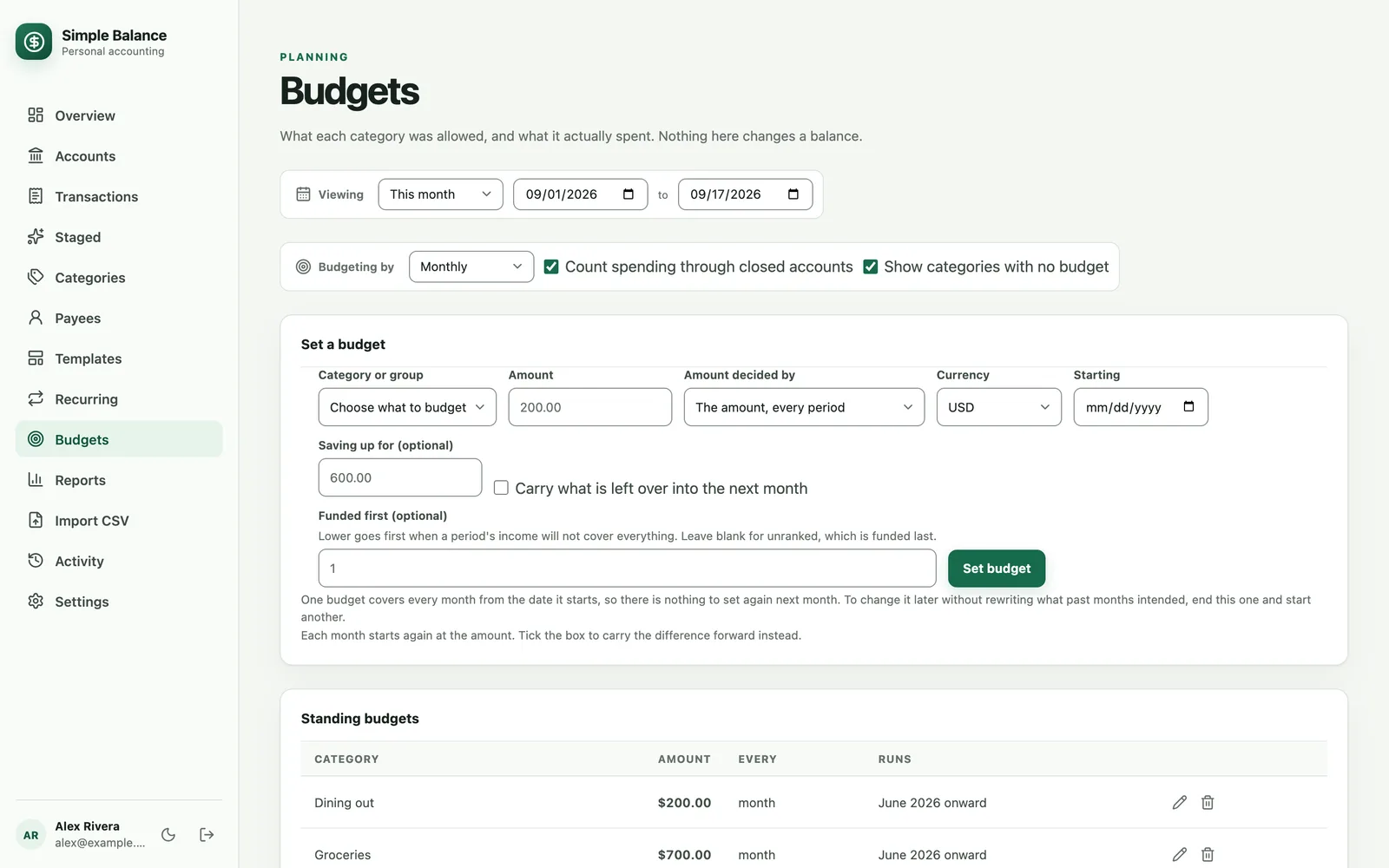
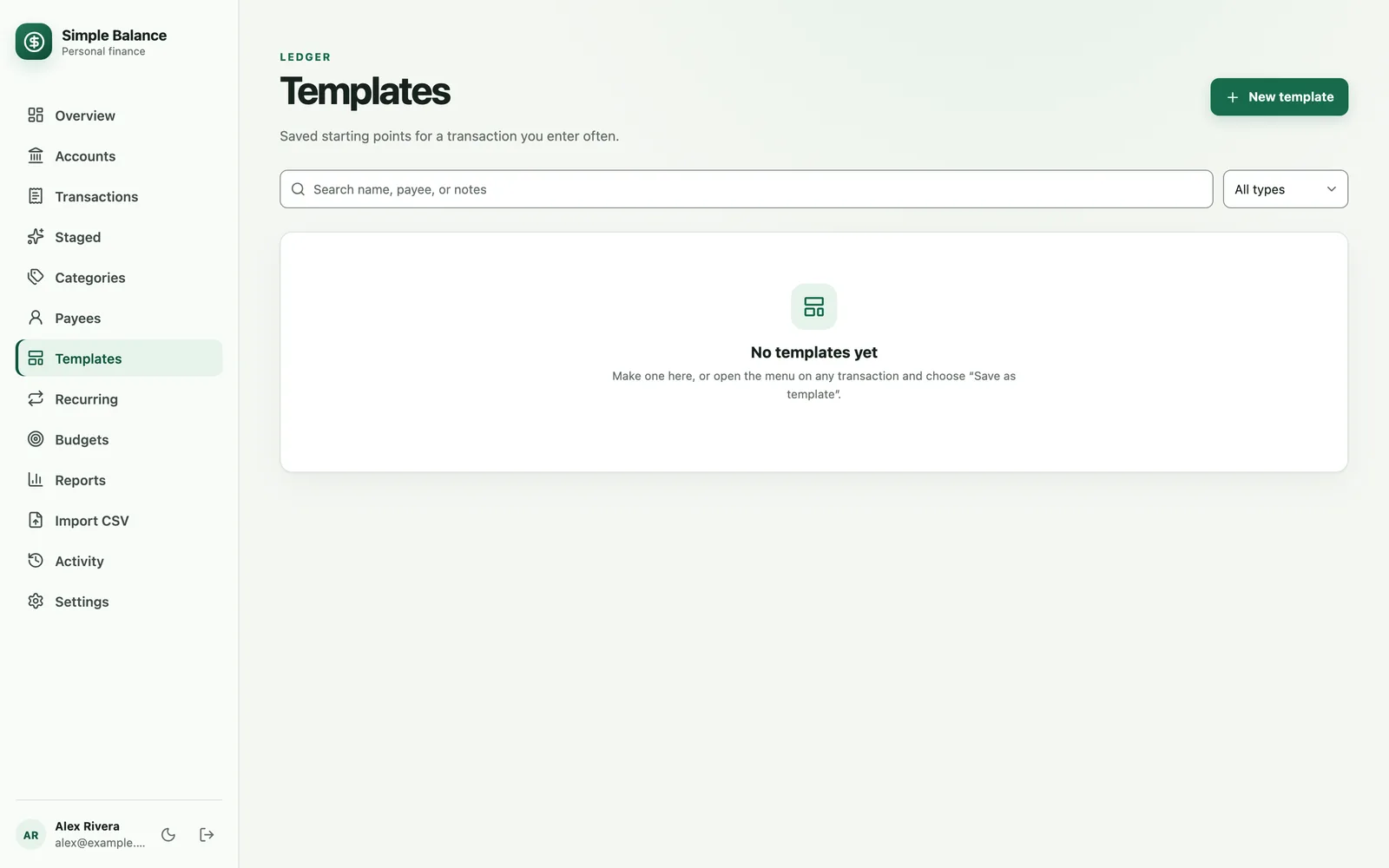
The money in this picture is made up. It’s the real product, filled with example spending.
Sources
- Suzanne Holloway, UF/IFAS Extension Leon County. The Basics to Budgeting. September 12, 2025.
- Adrie Roberts, Utah State University Extension. Dam that Cash Flow!. 2004.