Keeping it accurate
How to budget with a credit card
A card purchase is spending the day you make it, though the money leaves later. How to budget so the bill is never a surprise, and why to pay it in full.
A credit card turns one purchase into two moments. You buy groceries on the 3rd, and the money leaves your checking account weeks later when you pay the bill. To budget with a card, count the spending at the first moment, the day you buy something.
Why it matters
Card spending doesn’t feel like spending. Nothing leaves your bank account at the register, so it’s easy to spend the same money twice in one month.
The bill shows up after the month is over. By the time you see the total, it’s too late to change how you spent that month.
Carrying a balance is expensive. In August 2026, card accounts that were charged interest paid about 22% a year on average, according to the Federal Reserve. A two-year personal loan averaged about 12%, and a five-year new car loan about 7.5%. If you pay your full statement balance by the due date, you usually pay no interest on purchases at all.
It’s also easy to count the same groceries twice. If you count the purchase and then the card payment as spending, every total you look at is too high.
Three numbers on your bill
Card statements show three numbers that sound alike:
- Statement balance: what you owed on the day the statement closed.
- Current balance: what you owe today, including anything you’ve bought since the statement closed.
- Minimum payment: the least you can pay without a late fee. If you only pay this, you’ll be charged interest on the rest.
Paying the statement balance in full by the due date keeps your grace period. That’s the time between the end of the billing cycle and the due date, when many cards charge no interest on purchases. Card companies don’t have to offer one, though, and it usually doesn’t cover cash advances. The Consumer Financial Protection Bureau says cash advances start charging interest right away. Check your card’s terms to be sure.
How to do it
1. Count a purchase when you make it
Groceries bought on the card are grocery spending, on the day you buy them. That’s when you made the choice to spend.
2. Keep the cash for it
When you spend $80 on the card, $80 of your checking balance now belongs to the card company. Think of it as gone, even though it hasn’t left yet. If your budget says you have grocery money left, that money has to really be there when the bill comes.
3. Don’t count the payment as spending
Paying the card from checking just moves money between your own accounts. The spending already happened when you used the card. If you count the payment too, you’ve counted it twice.
4. Pay the statement balance in full
If your card lets you, set up an automatic payment for the full statement balance, not the minimum.
5. If you already carry a balance
First, stop adding to it. Use a debit card for new spending for a while. Then budget a set payment above the minimum each month, and keep an eye on the balance as it goes down. Watching it shrink makes it easier to keep going.
How to do it in Simple Balance
Add the card as an account
On Accounts, press New account and choose Credit card. Type what you owe as a plain number, and leave Starting balance type on Amount owed. The account starts below zero, because that’s money you owe, not money you have.
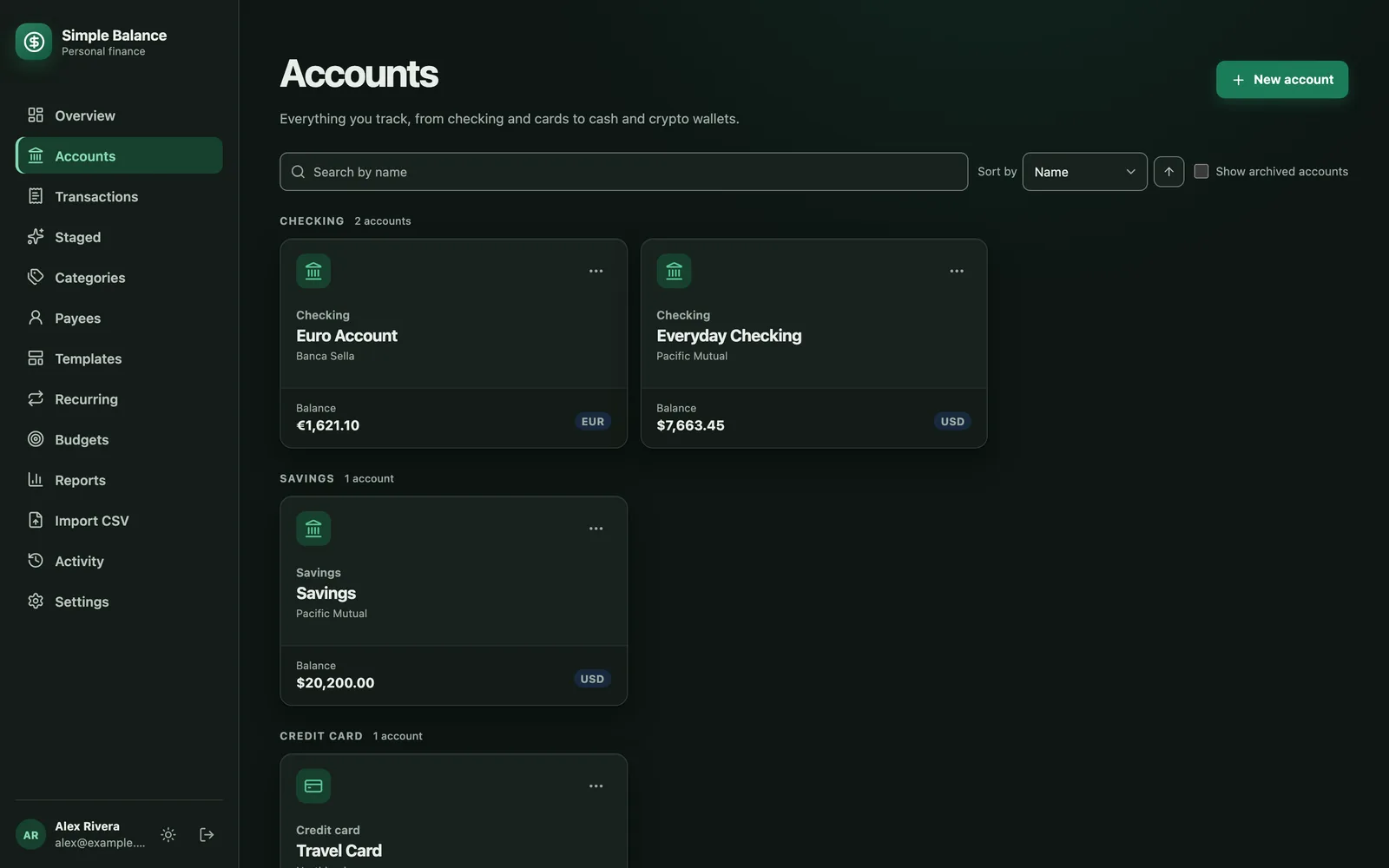
The money in this picture is made up. It’s the real product, filled with example spending.
Record purchases on the card
Each purchase is a Withdrawal from the card account, with a category. It counts as spending in that category on the day you made it.
Record the payment as a transfer
Paying the card from checking is a Transfer from checking to the card. A transfer has no category and never shows up as spending, so nothing gets counted twice. If you pay on the same day each month, save it on Recurring, and it’ll be ready for you when it’s due. In the transaction list, a transfer shows both accounts and no category, like the $600 one here.
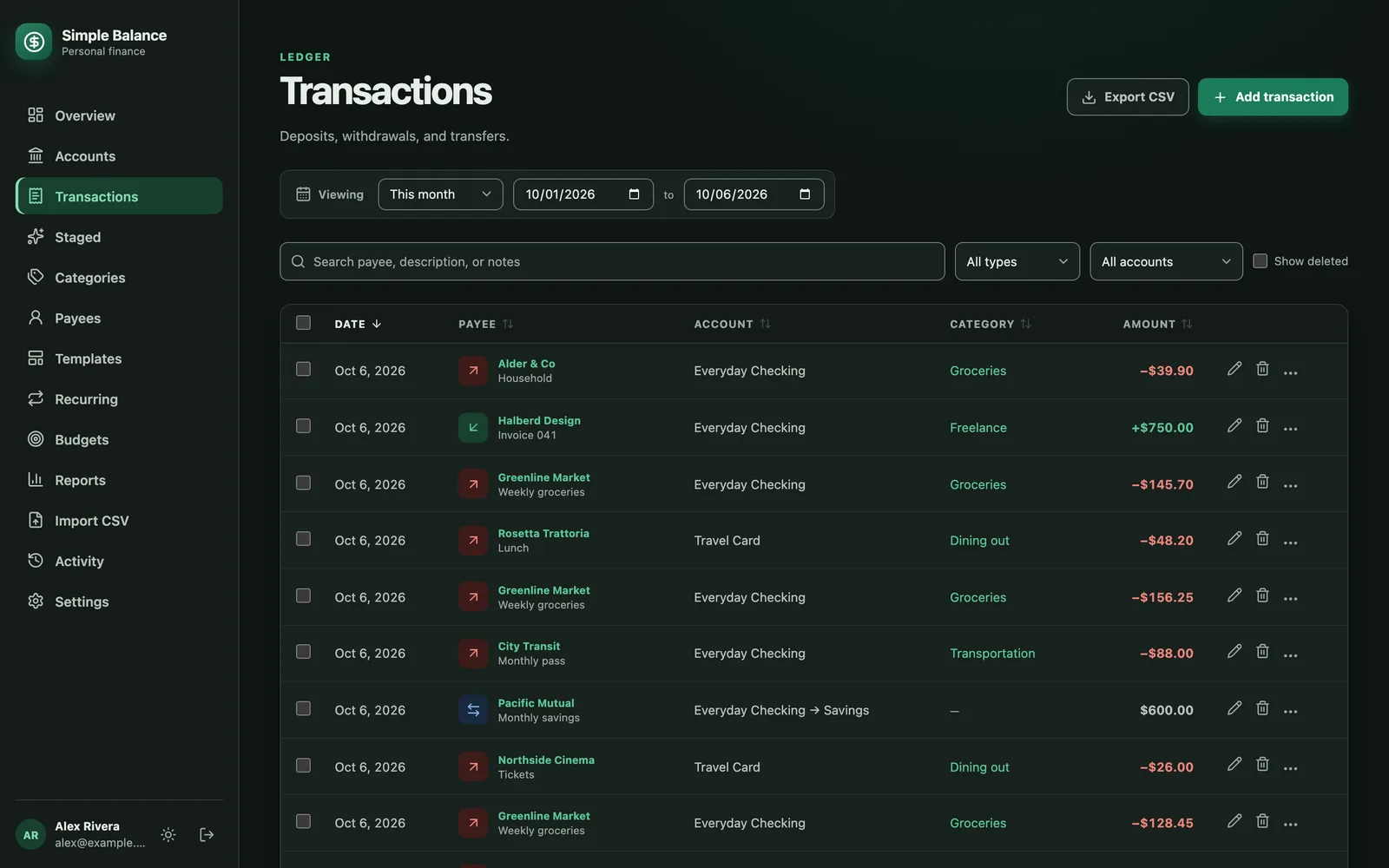
The money in this picture is made up. It’s the real product, filled with example spending.
Make interest easy to see
If your card charges interest or a fee, record it as a withdrawal from the card with its own category, like Interest and fees. It’s real spending. Seeing it on its own line each month is a good reason to pay in full.
How budgets count the card
In a budget that carries over, card spending empties the envelope the day you swipe, even though no cash has moved yet. Left to assign counts what you owe on the card, too. That keeps your budget from thinking you have more to spend than you do.
On Budgets, a budget carries over when you check Carry what is left over into the next month.
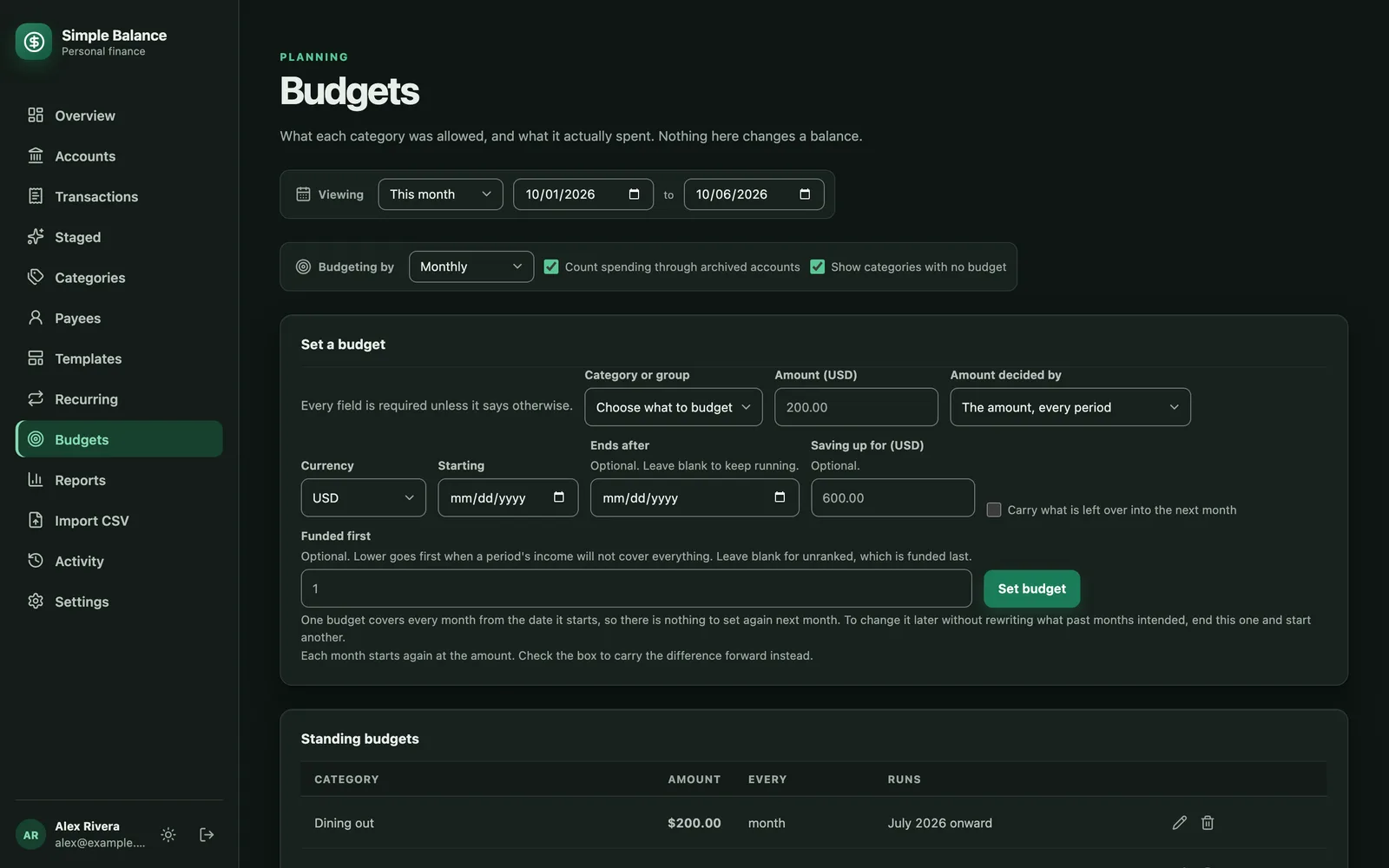
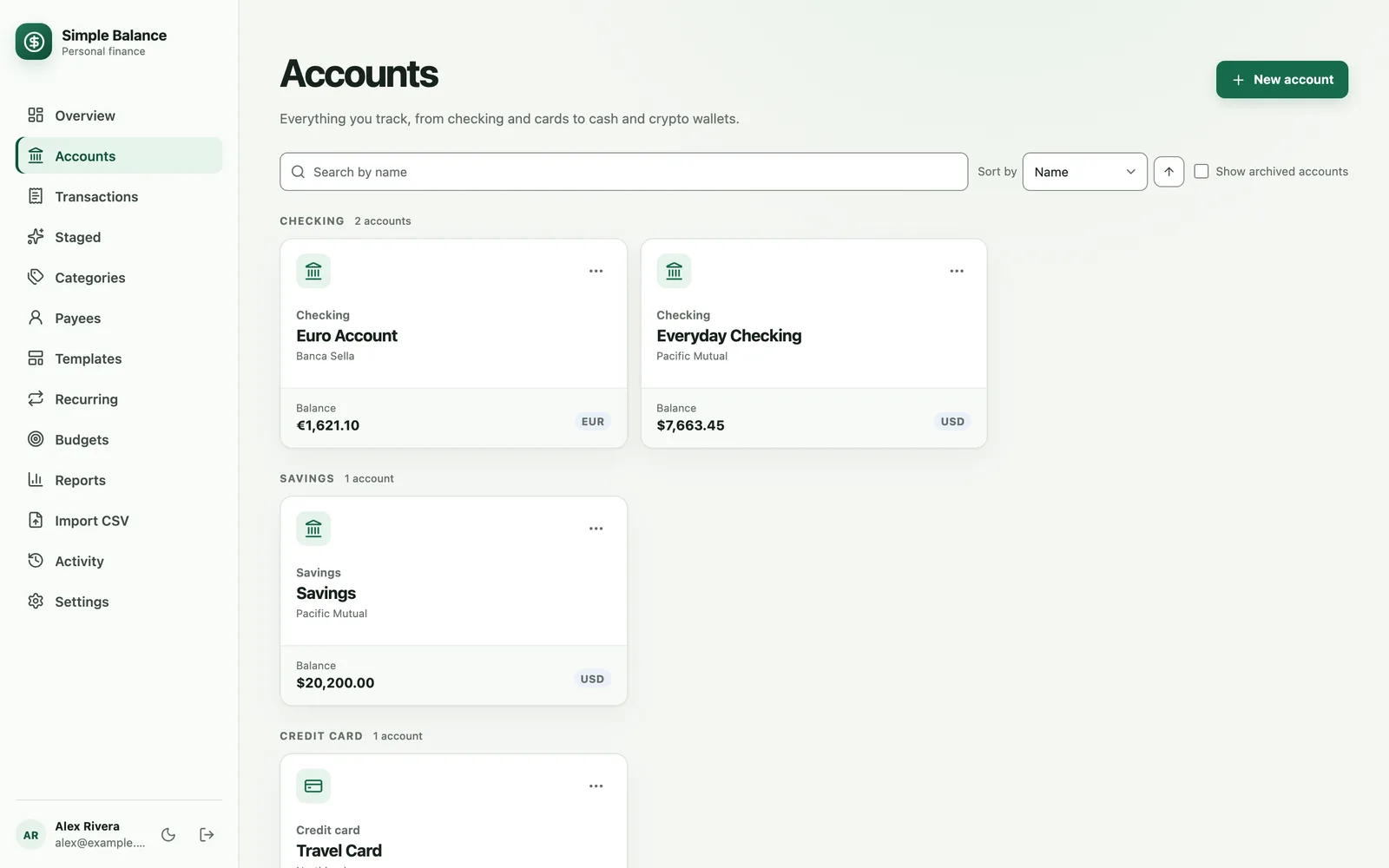
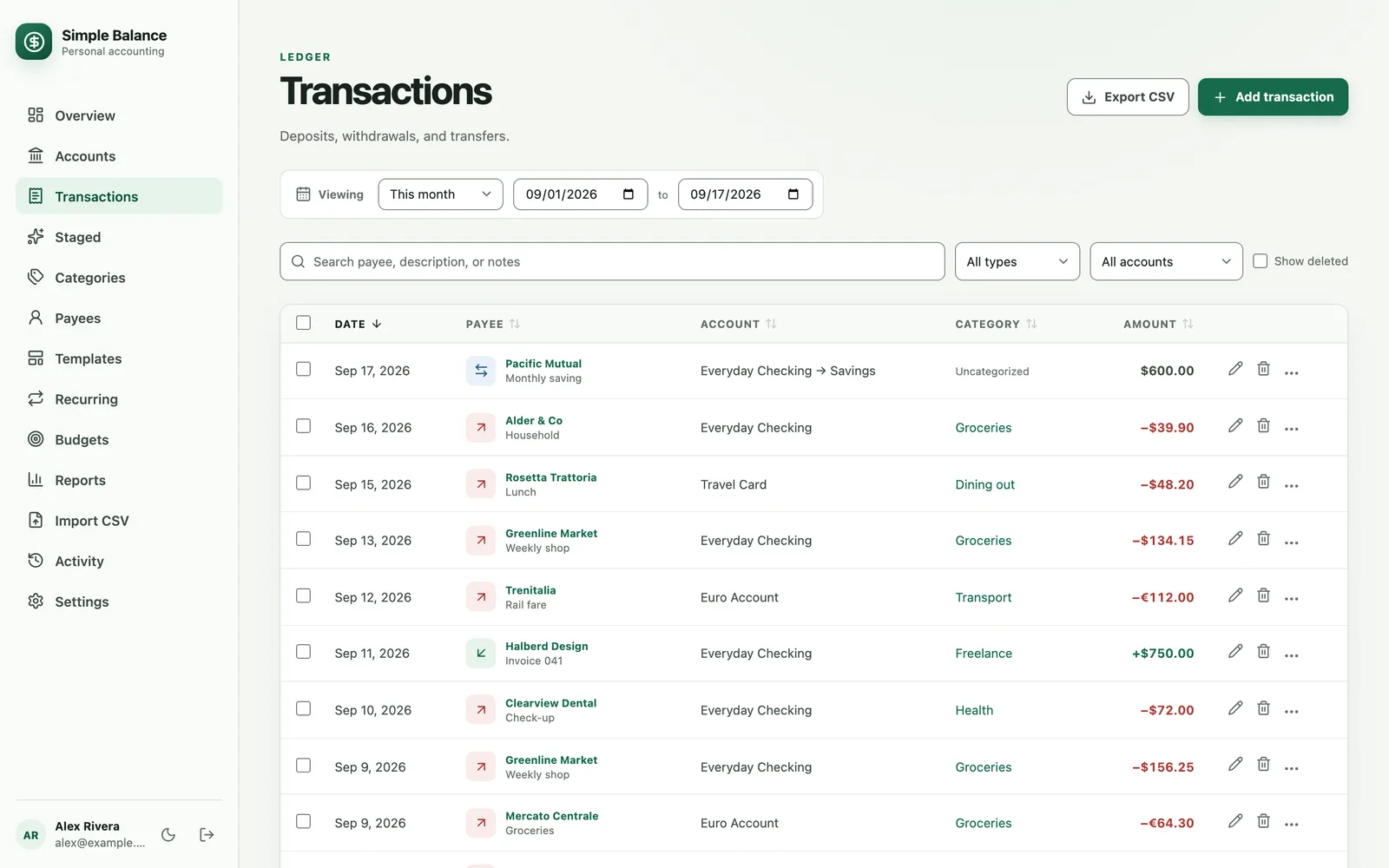
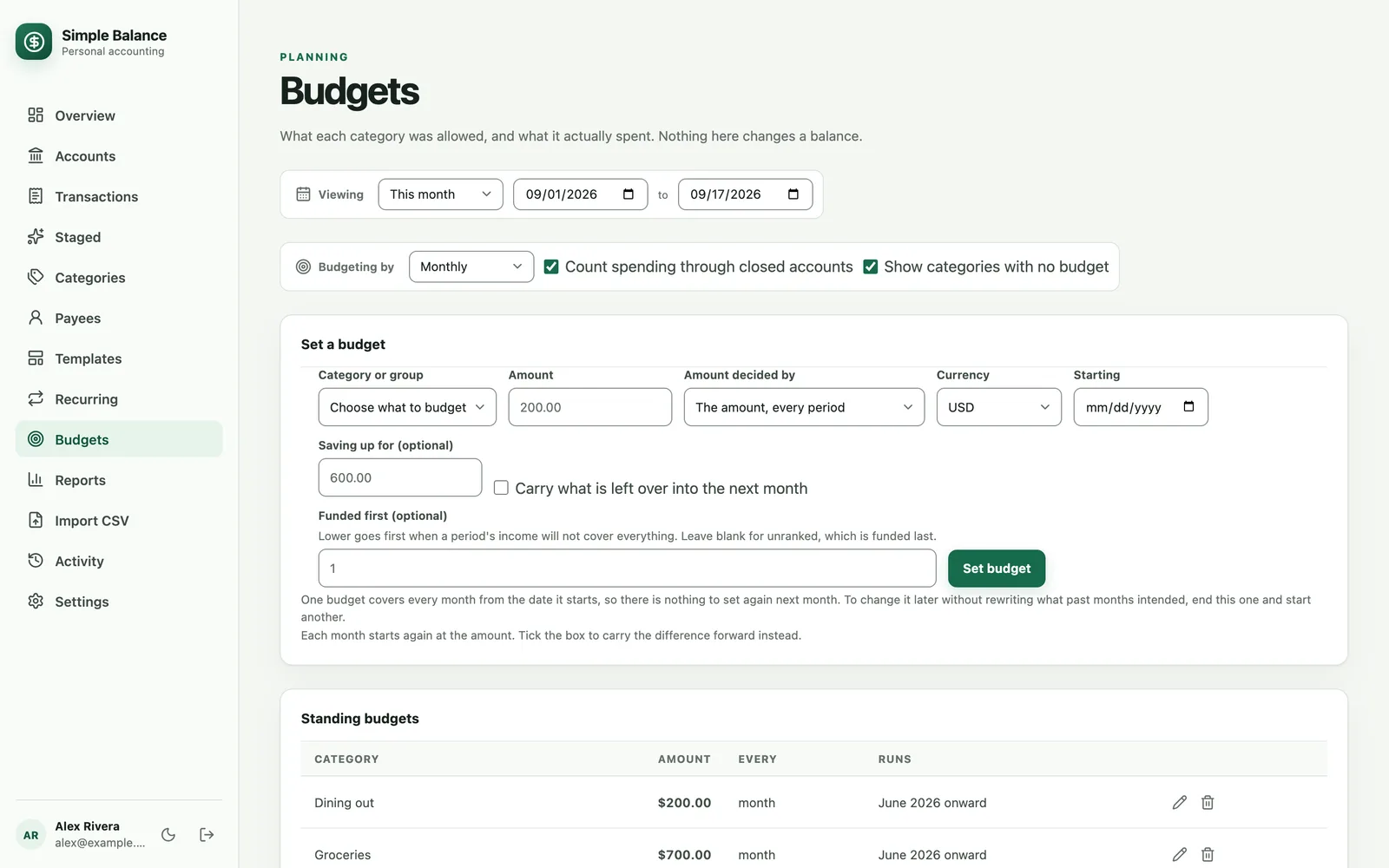
The money in this picture is made up. It’s the real product, filled with example spending.
Why two reports disagree
Reports has both an Income and expenses report and a Cash flow report, and with a card they won’t match. A purchase counts as an expense the day you swipe, but the cash leaves when you pay the bill. Both are right. They just answer different questions.
Find your statement balance
Open the card account and press Show register. The balance on the statement’s closing date should match what your statement says.
Sources
- Board of Governors of the Federal Reserve System. Consumer Credit, G.19. Release of October 7, 2026, with rates for August 2026.
- Consumer Financial Protection Bureau. What is a grace period for a credit card?. Reviewed September 23, 2024.
- Consumer Financial Protection Bureau. Key terms, from its credit card answers.